Why you need to watch Spanish Snow White movie ...

  • Subscribe to our RSS feed.
  • Twitter
  • StumbleUpon
  • Reddit
  • Facebook
  • Digg
Showing posts with label suits. Show all posts

Friday, April 5, 2013

Hannibal: "Apéritif”

Posted on 1:20 PM by christofer D
(Note: No major spoilers.)

Hannibal is a rare breed in that the first episode is genuinely good, mostly because there's no need for clumsy exposition. Anyone with half a brain already knows what's going on: Hannibal is a cannibal, but it will probably take at least one season  for anyone on TV to work that out. It only takes a couple of minutes to illustrate who Hugh Dancy is: a guy who frowns a lot because of Confused Emotions, and whose brain is a holodeck for blood-spattered crime scenes. Hugh Dancy means we can watch people get murdered in dramatised flashback form, instead of having some generic CSI person explain it to us with Science. 
Mads Mikkelsen is, obviously, fantastic. But for me, the harder sell was always going to be Hugh Dancy's character, criminal profiler Will Graham. Not because I'm familiar with his character (I'm not) but because the crime/mystery genre is already overflowing with cute-ish men in their 30s and 40s. Luckily Graham sidesteps the two main cliches of "asshole genius" and "dorky everyman", and is interesting enough to be a worthwhile foil to Hannibal. Still, like most stories about serial killers, Hannibal mostly features women as side characters or in the role of naked, brutalised corpses. In The Silence of the Lambs, this is less of an issue because Clarice Starling is just as important as Hannibal Lecter, but there's no real need to make a TV series about Clarice. We already know her story too well.

Hannibal Lecter is the ultimate glamorized serial killer, so it was a smart decision to keep him on the sidelines and use the first episode to focus on Will Graham's horrified empathy. While it's pretty easy to film gore and violence, it's harder to make the deaths in a crime show seem as emotionally "interesting" as the investigation process. Audiences are just too used to watching CSI and horror movies. In a serial killer mystery, the victims (as ever, a series of attractive young women whose interchangeable photos are pinned to a map) are often treated like little more than roadblocks on the journey to finding the murderer. Hannibal doesn't make a huge effort to humanise its various corpses (horrifying as they may be), but Will's awkwardness and disgust are very effective.
Visually, I'm already very satisfied. And not just by the pointless but deliciously nerdy set-design nods to The Shining. Even the promotional materials lean pretty heavily on the image of Hannibal as the vampiric centrepiece of a 17th century oil-painting, usually surrounded by fruit and skulls and slabs of raw meat. It must be difficult to avoid going overboard with all that gothic imagery, to be honest. Hannibal's already almost a parody of himself, sitting in a darkened room full of expensive furniture, eating exquisitely flambéed human lungs while the Goldberg Variations play in the background.  
Mads Mikkelsen's costumes simultaneously crack me up and make me sigh because they are soooo good. Here, we're getting to see Hannibal at his absolute peak: taller, better-looking and better dressed than anyone else onscreen. The rest of the cast are serviceable crime procedural characters wearing everyday American TV clothes, but Hannibal looks like... well, exactly what he is. A luxury-obsessed European aristocrat and connoisseur, secretly looking down his nose at all the small-minded American plebs who eat food from chain restaurants and dress like Will Graham.
Graham is deliberately dressed to look soft and harmless, in the wrinkled shirts of an academic who doesn't care about his appearance and sleeps on the floor with ten stray dogs. Hannibal is the absolute opposite, his clothes just another extension of the obsessive care he puts into every other aesthetic aspect of his life. When we see him apart from Graham and the FBI (at his office, or at home by himself) he wears beautifully tailored suits with grace-notes in the form of pocket squares and a tie so wide it's practically a cravat. When he goes on the road with Graham, I suspect his toned-down outfit is for Graham's benefit. Since Hannibal wears a red pocket square and a jacket with metal buttons to eat dinner by himself, I doubt that his sudden adoption of open-necked shirts and conservative v-neck sweaters was for his own comfort.
Read More
Posted in costume design, suits, tv | No comments

Wednesday, February 20, 2013

Person Of Interest: The man in the suit.

Posted on 12:36 PM by christofer D
Person Of Interest is three different genre shows stuck together. For Detectives Carter and Fusco it's a police procedural drama, whereas John Reese lives in a spy thriller and Harold Finch's story is gradually edging towards being a full-on dystopian cyberpunk sci-fi. Overall it's marketed as a crime show, more or less, which is what it mostly looks like on the outside. Like the majority of characters in procedural cop shows Carter and Fusco have very boring dress-sense, for practical and professional reasons. In costume design terms, the real interest lies with Finch and Reese.
Before I even saw the show, Reese had been described to me as a man who wears his clothes like a uniform. When he first appears he has nothing: no home, presumably no money, no real identity... until Finch comes along and sets him up with his very own apartment and a wardrobe full of identical black suits. Mysterious benefactors are a popular theme in fiction -- who doesn't wish a nameless billionaire would show up and randomly gift you with a new house? -- but Person Of Interest has a refreshing way of tackling the subject. Rather than twisting himself up in knots about receiving so much help from a total stranger, Reese just takes it.

What with his CIA training, subsequent betrayal, homelessness and total lack of friends or family, Reese is a man who has been stripped down to his bare bones. The things that normal people care about just do not bother him any more. Actually, Finch is like that as well, but for him it's more because he's been elevated beyond ordinary society thanks to his wealth, genius, and devotion to the Machine. With Reese there are scenes in almost every episode where you see him just fail to react to things that would have any normal person shying away in discomfort.
He doesn't care about people touching him or getting in his personal space. He doesn't care about money. He doesn't care about being watched and tracked constantly via CCTV. He doesn't care about getting beaten up, except in the sense that it's an inconvenience. When Finch picks him out of the gutter and sets him up in an enormous loft apartment with his own private arsenal, the only thing Reese is openly thankful for is that Finch has given him a purpose again. When you get right down to it, the only thing he really cares about is efficiency, which is why he wears the same outfit every single day of his life -- barring necessary disguises. Not having to think about clothes or look in the mirror every morning just removes another obstacle between him and his mission.
From a purely practical standpoint, Reese's monochromatic wardobe of identical suits is a stroke of genius. For all that you can compare the John Reese/Harold Finch duo to Batman and Bruce Wayne, Reese's main strength lies in his complete lack of distinguishing features. Although he's definitely good-looking enough to get by with a little superficial charm when the need arises, Reese is forgettable enough to be the perfect spy. The fact that his nickname during the police manhunt was "the man in the suit" tells you all you need to know, because as soon as he changes out of the suit? They don't even have a physical description. The sheer boringness of the outfit just amplifies how forgettable he can be, never mind how ridiculously easy it is to get into almost anywhere when you're a white, middle-aged man in a suit.
Finch's attitude to clothes is the polar opposite of Reese. Just by looking at him you can tell that he really enjoys dressing up -- even before you find out that he's a tailoring nerd. While Reese dresses to look as forgettable and generic as possible, Finch dresses for himself. Despite the fact that he spends most of his time alone in a disused library, he wears a three-piece suit almost every day, often including a pocket square. He definitely has different grades of suits, though. When he's just going to be sitting in front of a computer he wears softer, more comfortable outfits in warm colours like brown and maroon, whereas on days when he's going undercover in one of his millionaire personas he wears suits that are more obviously businesslike and luxurious in appearance.
Both Finch and Reese's suits have been cleverly matched up to the physical appearance intended for each character. Jim Caviezel, who is in reality beginning to look rather thicker around the middle than is ideal for a elite special-forces agent, looks far slimmer in his black suits than in anything else he wears on the show. His jackets are very rarely buttoned, both because an open jacket allows for more flexibility during fight scenes and because it's far more flattering to Caviezel's broad-shouldered frame. Finch's suits are typically quite soft by contrast and the waistcoats make him look a little rounder, which fits in with his list of harmless, birdlike cover identities: Finch, Crane, Wren, Partridge. Like most stories that focus on a partnership, the two characters have to balance each other out. While brains/brawn would be an unfair description considering Reese's skill as a tactician, it's certainly the case that much of Reese's strength lies in his ability to physically intimidate, whereas Finch relies on people mistaking him for the boring, fussy middle-aged man he appears to be.

Read More
Posted in costumes, menswear, movie costumes i have loved, person of interest, suits, tv | No comments

Sunday, October 14, 2012

The iconic menswear of James Bond.

Posted on 1:51 PM by christofer D
In the run-up to Skyfall I've had a few requests for Bond-related costume posts. Well, I'm afraid that's probably not going to happen, except maybe for Skyfall itself. The reason for this is I try to write about things that are slightly off the beaten track, costume-wise. There are some TV shows and movies that already get a lot of mainstream coverage for their costumes, either because they're showy and beautiful like Downton Abbey or Titanic, or because style and product placement are an acknowledged feature of the story. The James Bond franchise definitely falls into that second category, with Bond's suits being some of the most iconic movie costumes of the past 50 years. Just try counting how many lazy dudes you see at Halloween parties this year, wearing a tux and claiming to be 007.
The character of James Bond is all about style: signature cocktails, well-tailored suits, and vehicles and weaponry whose serial numbers are lovingly recited in every single movie. There are entire books dedicated to Bond's costumes, to his accessories, his gadgets, and the love-interests who are purposefully written as being less memorable than his trusty Walther PPK. There have been whole museum exhibitions catering to fans of Bond props and costumes. Basically, as a casual watcher rather than a hardcore 007 nerd, I have little to offer. It'd be the blogging equivalent of an English undergrad thesis on Pride & Prejudice. HOWEVER! I am able to offer you a plethora of links to other, far more well-informed people!

First of all, there's Clothes On Film's guest blog on the topic of On Her Majesty's Secret Service, which provides a kind of prologue to Daniel Craig's suits in Skyfall. Also on Clothes On Film is a similarly suit-nerdy post on Dr No, and if you want more in this vein then I suggest checking out the author's home blog, The Suits Of James Bond. If you want to look like Bond yourself then there's always Affordable Bond, or the clothing section of the exhaustive Bond Lifestyle site.
If you're more into Daniel Craig specifically, I liked this short video from behind the scenes on Skyfall. Then you can segue neatly into Designing Bond's Look with costume designer Lindy Hemming, an interesting glance at how Bond's style has developed over the years (including the awesome first shot of Sean Connery's turnback cuffs in Dr No). The thing I enjoyed most about this video is the way it accidentally highlights how godawful Pierce Brosnan looks to a modern eye. Not physically, of course, but the fact that his power-tie/business suit look now makes him look like a corporate douchebag of the first degree. I suspect that in 15 years he'll look fine again, thanks to the Law Of Vintage. 1995 is too close to the present day for Brosnan to seem retro and cool like the vintage styles of the earlier Bonds, so instead he just seems dated and embarrassing.
I love the slavish attention people pay to Bond's suits, although I do wish other modern-era movies got a fraction of the costume-based attention Bond receives. It's mostly down to the fact that audiences don't really think of Bond's suits as costumes; they're more like an extension of the whole 007 fashion/booze/status-symbol industrial complex. The Bond franchise is one of the few instances where a film's content actually invites product-placement, because the whole point of Bond is that he's super cool all the time, and that means he has to have all the best accessories. Bond's image is so important that the actors tend to become Bond in the public eye -- something that I've definitely noticed with Daniel Craig. Craig's Bond is the biggest bruiser since Connery, and looks like the kind of guy who would headbutt you during a barfight. Like Lindy Hemming says in the clip I linked above, his suits are very "mean", very tightly fitted -- even though he's the most muscular Bond so far. Daniel Craig clearly loves this look himself because it's what he wears to most red-carpet appearances, which is slightly unfortunate because his own suits are (inevitably) not quite as well-tailored as what he gets to wear as Bond.
The result is that in real life, Daniel Craig often ends up looking like the proverbial condom full of walnuts, tailored to within an inch of his life but missing the mark he previously set whilst in-character. I realise that this is a nitpic because Daniel Craig usually looks great and has excellent dress-sense when compared to most male A-listers, but seriously, Dan, if you're reading this: stop trying to strangle yourself with your own clothes. Your suits don't have to be that tight. The main problem seems to be that he knows what look he's going for (ie, the look he has when he's playing Bond, basically) but in real life there are more things to consider than the suit being tailored close to the body. The key thing that differentiates Bond's suits from a normal outfit of the same style is that they're action costumes and therefore have been designed with movement in mind, meaning that they're a lot more relaxed and flexible than a typical suit. Daniel Craig on the red carpet usually looks like he could barely manage to crouch down or move his arms in a full circle, never mind leap out of a helicopter and wrestle some supervillain down a lift-shaft.

Read More
Posted in james bond, menswear, suits | No comments

Monday, September 17, 2012

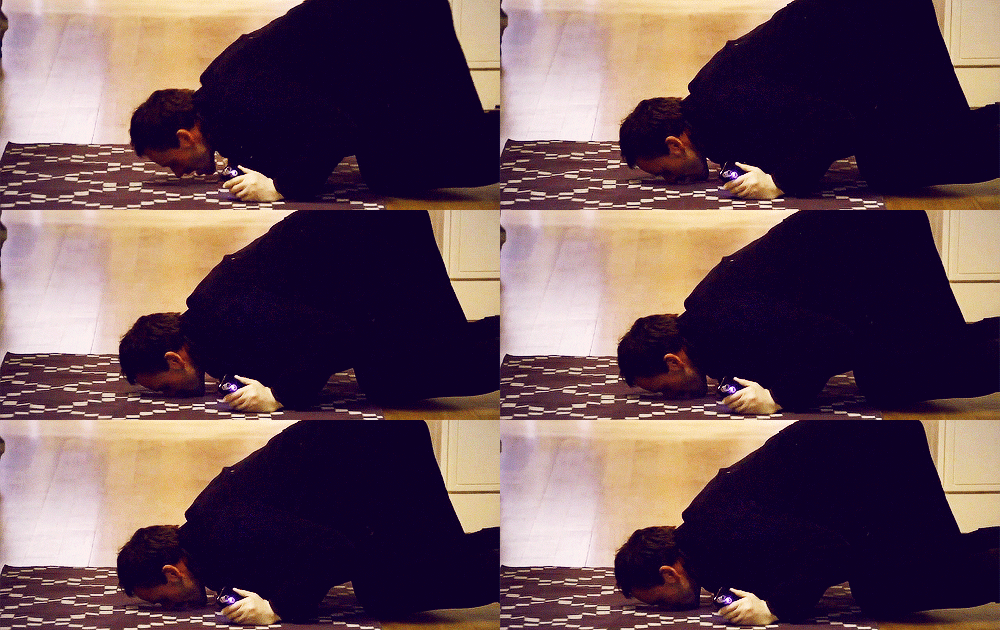
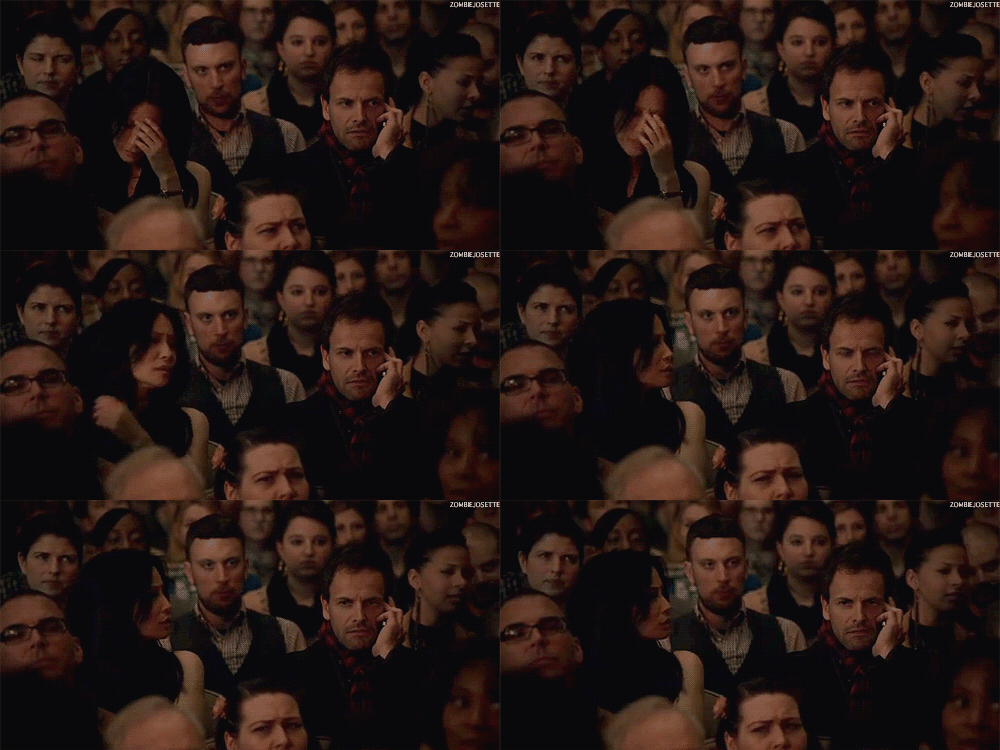
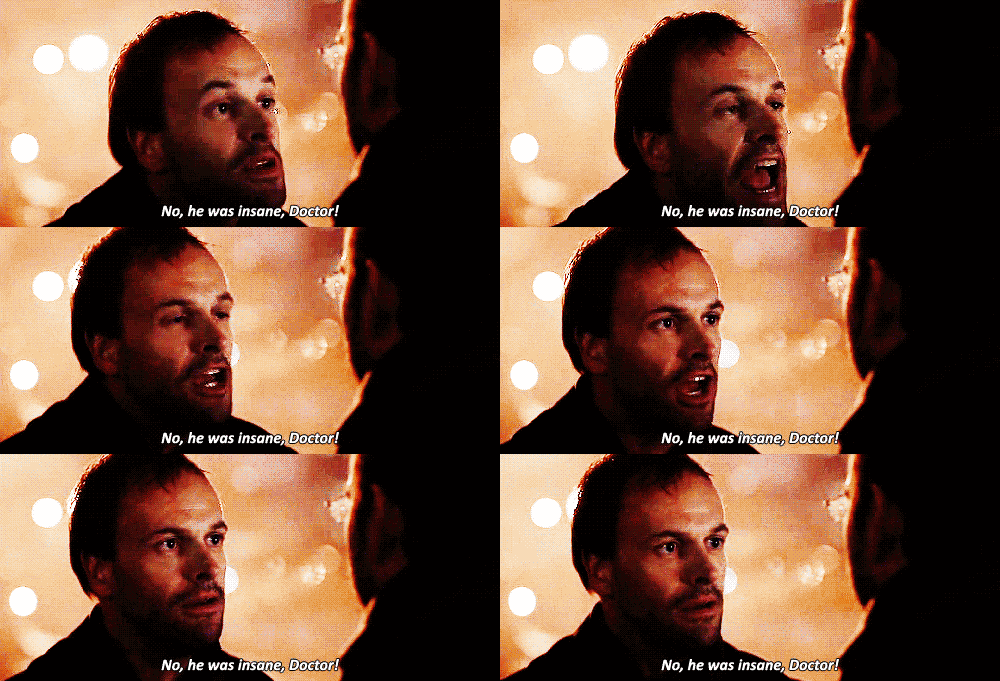
Elementary: characterisation, the unaired pilot, and its relationship to Sherlock Holmes canon.

Posted on 1:51 PM by christofer D
Previously: From Arthur Conan Doyle to New York City's "Elementary": The Costume Design of Holmes and Watson.

Given the nature of Sherlock Holmes fandom, it's not entirely surprising that people were forming their opinions of Elementary and arguing about it before anyone had even seen the show. Some Holmes canon purists hated the fact that it was set in America; some fans of BBC Sherlock hated the idea of "another remake" so quickly on the heels of the British series. And people from both groups seemed irritated by the concept of a female Watson, prompting the first wave of backlash from pre-emptive Elementary fans who were determined to love it because Lucy Liu is awesome and sexism is bullshit. My own reaction to the early Elementary announcements was trepidation, partly because I didn't trust American network television to make a crime drama centering around a male/female relationship not be a romance. But since the showrunners had expressly put out statements to counteract this worry among Holmes fans, I decided to give it a go.
(source)
I should mention now that this post will contain some spoilers, although they won't be connected to the crime plot. The main focus of the episode was the fledgling relationship between Holmes and Watson, and to be quite honest the mystery/crimesolving aspects were not good. Even by the standards of long-running formulaic crime dramas like Bones or CSI it wasn't particularly interesting, and the vast majority of deductions made by Holmes were ones that could well have been made by the police. Not to mention the fact that it fell for the old crime-TV problem of there only being one believable suspect, ie "that one actor you kinda recognise". Which isn't to say that I'm giving the episode a negative review -- I just feel like the detective work never really approached the quality of the deductions in Holmes canon, or indeed in BBC Sherlock.

(source)
Some people will probably take issue at comparisons between BBC Sherlock and Elementary, but it's unavoidable. The main thing one has to take into account when judging them against each other is that Elementary was made for the framework of mainstream American crime TV while Sherlock was not. Sherlock had to be fantastic right off the bat because it was a flagship show for the BBC, was created by the writers of the BBC's other cult show (Doctor Who), and because it was a three-episode miniseries wherein each episode was the same length as a feature-film. Elementary, on the other hand, is intended to have a longer run, and unlike Sherlock will not be covered by a nation-wide media blitz. A full-season episodic crime drama on CBS is by nature a completely different animal from the high-budget, high-stakes fannish dream that is BBC Sherlock. Oh, and for anyone who is still worried that this show is "based on" BBC Sherlock, I can assure you that whatever its origins, it bears no resemblance to Sherlock whatsoever. So any die-hard Sherlock fans can rest easy in the knowledge that no narrative toes are being stepped on, regardless of Elementary's future success or failure.
(source)
I'm surprisingly optimistic about the Holmes/Watson relationship in Elementary. The pilot lives up the showrunners' assurances that they won't be paired together romantically, although I wasn't wild about the explicit indications that Holmes isn't asexual. First of all I think that it's an important aspect to Holmes's character, particularly in a modern context when his canonical disinterest in women can't so easily be put down to misogyny. Secondly, I doubt that Elementary will ever include a serious love-interest for Holmes so these hints at a "brought low by A Woman" backstory are uninspiringly similar to the hordes of other TV detectives who turned to substance abuse after a breakup or fridged love-interest. I hate stories where the unwritten prologue is "an invisible woman was evil or died violently, and that's why your male hero is what he is today". UGH.

Looking back on it, the way the show introduced Holmes' attitude to sex and romantic relationships was pretty bizarre, and not intentionally so. While Holmes' very first lines to Watson were an attention-grabber, the whole "Do you believe in love at first sight?" thing ultimately went nowhere. For a few seconds I was sure that he was going to sham at being "in love" with Watson in order to get rid of her, because that's the kind of thing BBC Sherlock would do in the same scenario. But in fact it just turned out to be him showing off a memory trick that was never properly explained and wasn't all that impressive to begin with. The ability to pick out one conversation from a selection of background noises will undoubtedly come in useful in later episodes, but introducing it in this situation was random and jarring.
(source)
As for the conversation regarding his earlier visitor (Sex-worker or one-day-stand? The former seems more likely, seeing as he only just got out of rehab.) and the handcuffs, I found it to be as clumsy and abrupt as the first few lines of the Holmes/Watson introduction scene. I understand the desire to set out some information regarding Holmes' sexuality in the first episode, but the delivery didn't really gel with the relatively considerate and respectful way he treated Watson in other scenes. I'm more interested in the ongoing subtext that Holmes is submissive and has some familiarity with BDSM terminology, as in the rooftop scene where he refers to someone as "more of a sub than a dom". Obviously this kind of statement is silly and you can't categorise people like that, but otherwise the references to D/s dynamics interesting and far from sensationalised. A welcome change from Guy Ritchie's Sherlock Holmes and BBC Sherlock, both of which featured tiresome scenarios where Irene Adler acted out the role of saucy, whip-cracking minx to Holmes' nonplussed and/or overwhelmed naif. Come to think of it, it's rather bizarre that all three included those scenes in the first place, but it seems a lot like Elementary is going the psychological route rather than the Carry On Bondage route, thank god.
I expect that these efforts to soften or normalise Holmes are partly down to the need to quickly highlight the differences between BBC Sherlock and Elementary. Sherlock is loud, attention-seeking, and refers to himself as a sociopath, whereas Elementary Holmes is more eager to please, openly expresses empathy for complete strangers, and seems relatively functional in everyday society. Something I picked up on right away with Elementary Holmes was that when he said to Watson, "I don't form connections with people," it didn't ring true. Possibly this was intentional -- another indicator that Holmes' Dark Past has led him to avoid relationships? -- but while BBC Sherlock can't make friends easily because he's so demonstrably an utter dickwaffle, it seems like the only reason why Elementary Holmes is alone is because he's purposefully avoiding personal connections. Which is another reason why I'm hoping that the as-yet-unconfirmed Tragic Backstory is actually a reference to Moriarty (male or female) being the catalyst for Holmes' isolation and addiction, rather than it being a more typical failed relationship story.
(source)
It's difficult to tell whether the softer characterisation of Elementary's Holmes will make any difference to the overall popularity of the show. For one thing, Elementary and BBC Sherlock are playing to different audiences, both culturally and in terms of fannish interest groups. I doubt that Elementary is ever going to command the kind of hyper-enthusiastic fervour that BBC Sherlock receives, at least not if it continues on in the vein of "watchable-but-generic episodic crime drama". Plus, Sherlock is far more likely to attract fans of the original Holmes stories because it's a closer adaptation and is full of classic Holmesian trivia. On the other hand, Elementary has considerably more freedom and opportunity to change over the course of a season-long run, and some of those changes will almost certainly be in response to audience reactions.
(source)
The main detail in which Elementary is more canon-compliant than BBC Sherlock is the characterisation of Holmes as being nice. All three recent Holmes adaptations  -- BBC Sherlock, the Guy Ritchie movies, and House, MD -- have set Holmes in the "genius asshole" mould, with him being a man so elevated from everyday society that he finds it acceptable to be actively horrible to "normal" people, even his best friend. This type of character is very popular at the moment because people behaving badly and getting away with it can make for very entertaining viewing, but taken to its current extreme it's really not all that similar to canon Sherlock Holmes. A takedown of the "lovable arrogant bastard" cliche is a topic for another day, but I will say that it's refreshing to see Elementary break away from this type of characterisation. It's not a particularly significant scene in the grand scheme of things, but towards the end of the episode when Holmes apologises to Watson through the glass of the holding cell... how unusual is it to see that type of exchange in a "socially maladjusted genius fights crime" TV show?
(source)
I suspect that thanks to Holmes-inspired shows like BBC Sherlock, House, MD and so on, the public perception of Holmes has been skewed slightly from the original characterisation of a man who, while misanthropic and sometimes rude, is ultimately a very caring and moral person. There are a couple of quotes from Lucy Liu to the effect that the Holmes/Watson relationship in Elementary will be a lot more equal than we're used to seeing, and there's already evidence of that in the pilot. Holmes already listens to Joan's opinion, as well as seeming eager to please and, I think, to let her be in charge. And a lot of this may be a direct effect of Watson being a woman because while "long-suffering sidekick" is funny when it's Martin Freeman or Jude Law, it's less funny when the long-suffering sidekick a woman who is technically being paid to be a caregiver. So in fact, the casting of Watson as a woman had a significant impact on the characterisation of Holmes himself.
My least favourite deduction. (source)
So: While the the combination of Watson's no-nonsense steeliness and Holmes' mix of vulnerability and enthusiasm were delightful, the writers are really going to have to up their game when it comes to the crimesolving aspect of the show. In fact, I'm hoping that some better-written crime scenes will be added to the pilot episode when it airs, along with some cleanup regarding the somewhat incoherent Holmes/Watson introduction scene. Aside from that, here are some things I'm hoping to see more of in future episodes:
  • BEES. (Almost certainly we will get this. HURRAH.) 
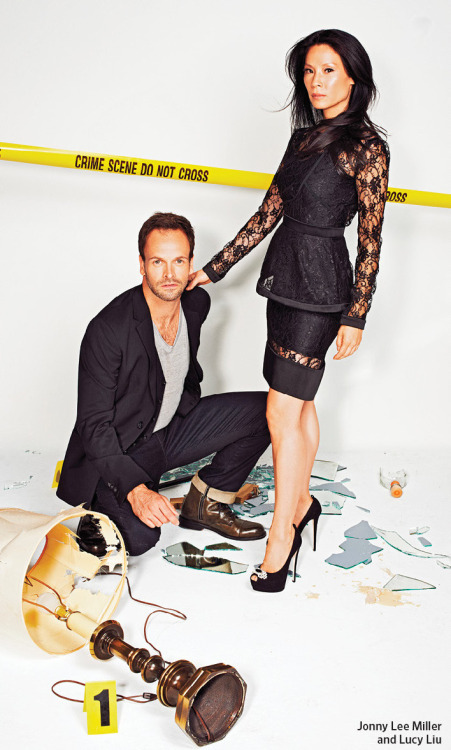
  • Further (respectful) indications that Holmes is what I saw described somewhere on Tumblr as a "happy sub". By which I mean, no to cheesy handcuff jokes (these stopped being funny in 1975, yet TV writers still seem to love them), and yes to more coherent characterisation of Holmes as a person who likes to have someone to ground him, ie Watson. I strongly suspect that the show is going in this direction already, especially since every single publicity photoshoot has been choreographed to have Lucy Liu in a position of authority while Jonny Lee Miller sits or lies at her feet, which is not the way male/female duos or buddy-cop pairings are usually pictured. 
  • BETTER DEDUCTIONS. A couple of the deductions made by Holmes in the pilot episode were acceptable, but the rest were things that could have been made by any number of TV detectives, and Holmes needs to stand out. At the moment, it's honestly unclear to me why the police would allow him -- directly out of rehab! -- to be at a crime scene. (Sidenote: Holmesian deductions don't even need to make sense in the real world -- they just need to be showy and impressive. These were neither.) 
  • Tying into the previous point, I'd love it if the format of each episode's crime storyline could break away from the tried-and-true CSI formula wherein it's very easy for viewers to work out who the killer is, but I don't have high hopes of this because the show is on CBS. I'd be happy enough if they kept the formula but added smarter and more elaborate deduction scenes.
  • Some kind of scene where Joan protects Holmes in a physical altercation.
Read More
Posted in costumes, elementary, sherlock, sherlock holmes, suits, tv | No comments

Monday, September 10, 2012

From Arthur Conan Doyle to New York City's "Elementary": The Costume Design of Holmes and Watson.

Posted on 10:50 AM by christofer D
(This post is spoiler-free for CBS's Elementary.)

Like many Sherlock Holmes fans I had mixed feelings about the BBC's plan to make a modern-era Holmes adaptation, and was once again rather doubtful when CBS announced that they were going to film what sounded worryingly like Sherlock: New York City edition. But since BBC Sherlock won me over within about five minutes of its first episode, I decided to keep an open mind when it came to Elementary. I can understand people who don't like the idea of a US-set Holmes (particularly one that exists within the strictures of an episodic crime procedural), but I have no worries whatsoever regarding the casting of Lucy Liu as Watson. If Holmes and Watson are still platonic friends -- which the Elementary showrunners have already assured us will be the case -- then in a 21st century setting, it shouldn't matter that Watson is a woman. Will this be a close adaptation of Conan Doyle's vision? Probably not, but it isn't as if the existence yet another Holmes can retroactively damage any of the hundreds of other versions we have to choose from.
The PLAGIARISM SCARF in action.
I was impressed to notice that even though all we've seen of Elementary so far are a few publicity shots and (in some cases, anyway) screener DVDs of the pilot episode, Holmes and Joan Watson already have very distinctive costuming styles. Most of the costume-related fan-commentary I've seen so far, though, is people expressing irritation at the apparent similarities between BBC Sherlock's famous coat and scarf, and the costume worn by Jonny Lee Miller during some scenes in the Elementary pilot. The two outfits are, I suppose, quite similar, but in general Elementary Holmes' styling couldn't be more different from BBC Sherlock's. And it's worth noting that Elementary takes place during autumn/winter in New York, so a thick coat and scarf aren't exactly out of place.

More of Sidney Paget's Holmes illustrations can be found here.
In relation to the clothes worn by Holmes in Conan Doyle's books, the costuming in BBC Sherlock is surprisingly faithful. In his original iteration as a Victorian gentleman, Holmes was habitually neat and well-dressed whenever he was outside 221B Baker Street. His most memorable outfits are the floor-length housecoat he wears at home, the iconic deerstalker/tweed suit outfit, and the sleek black 19th-century suits he wears most of the rest of the time. The perception of Holmes as a conservatively-dressed, dapper urbanite was further publicised by Sidney Paget's accompanying illustrations, which live on to this day as the "real" visualisation of classic Sherlock Holmes and generally show Watson as a typical Victorian gentleman dressed in three-piece suits and long overcoats.
More info regarding BBC Sherlock's coat can be found here.
BBC Sherlock's costumes are very uniform, with Benedict Cumberbatch invariably wearing dark trousers and shirts tailored to button-popping tightness around his skinny frame. Much like "canon" Holmes, he's soberly and expensively dressed, with the iconic Belstaff coat serving to give him extra dramatic flare during all those scenes where he swoops around like a cross between Dracula and a flamingo. BBC Watson, on the other hand, looks rather different to his Victorian namesake, mostly because he's played by Martin Freeman. Freeman is short, middle-aged, and harmless-looking, and the costume designers evidently took this into account when picking out his clothes. Watson's characterisation is a bit of a free-for-all when it comes to TV and film adaptations because his role in the books is usually that of a narrator or foil for Holmes' info-dump speeches, meaning that his canon personality is less fleshed-out than Holmes'. BBC Sherlock's Watson is often underestimated by people who aren't Sherlock, characterised as a seemingly "normal" and friendly everyman who hides his adrenaline-junkie nature. And Martin Freeman's boring, jumper-wearing exterior supports that.
(source)
In my opinion, the most canonical versions of Holmes and Watson would be Jeremy Brett's pitch-perfect Holmes from the 1980s-90s Granada TV series, and Jude Law's Watson from the Guy Ritchie films. Granada Holmes is widely regarded to be the most faithful adaptation of the short stories, and Brett himself was so obsessively devoted to canonical accuracy that he more-or-less acted himself into the grave. And he wasn't just a great actor -- he looked the part as well, with his slicked-back hair, aquiline nose, and excitable mannerisms. Brett's two Watsons, however, had more in common with the bumbling Jam Watsons of the WWII-era Basil Rathbone movies than with the character Conan Doyle set out to write. Jude Law's Watson is my favourite because he's Action Watson. When the Holmes stories first became popular, Conan Doyle was rather nonplussed to discover that readers far preferred the eccentric, misanthropic Holmes to the more classically heroic Watson, and public opinion has never really swung Watson's way since then. Upstanding, handsome, and a war hero, Watson is a good Victorian role-model but is nowhere near as intriguing a protagonist as Holmes.
(source)
Robert Downey Jr's Holmes looks nothing like canon Holmes, but that doesn't really matter because his adventures take place in some kind of Victorian-adjacent steampunk universe rather than in the "real" world of Arthur Conan Doyle. It wouldn't be in-character for RDJ's Holmes to wear a sombre black suit, just as if canon Holmes dressed like RDJ then he'd be summarily banned from every gentleman's club in London. The costume design in the Guy Ritchie movies is far closer to the kind of character-led costuming you see in present-day movies than the costuming of a period drama, but dressing an actual modern-era Holmes is a completely different situation yet again. It's important to remember that in the 19th century, people had far fewer clothing options. Holmes and Watson are middle/upper-class men, so they wore suits and hats. Every day. Victorian standards of neatness were different from our own so while we know that Holmes was rather vain, we can assume that Watson still looked far more formal than most people we see today. In 21st-century London or NYC you can get away with wearing pretty much anything, so there can never really be an "accurate" modern version of Holmes and Watson's rigidly conventional Victorian wardobe.
(source)
For example, if we characterise a modern Holmes as being a down-on-his-luck Oxbridge toff who follows the same basic life story of canon Holmes -- ie, posh upbringing; Chemistry at Cambridge; casual drug use and possible split from his family; development of his career as a consulting detective -- then we might well arrive at the character of BBC Sherlock, whose limited but high-quality wardrobe is very similar to that of canon Holmes. But in the 21st century, men are no longer required to wear a uniform of tailored suits and coats, so we already know that Sherlock's clothes are very much a personal choice rather than something he wears because it's the only conceivable option. You could just as easily characterise a modern Holmes as an academic or nerd (which he is), and have him wearing a pocket-protector or sloganised t-shirts. Or have him, as a consulting detective, wear outfits informed by the long tradition of noir crime-fighters from the past 80 years of film and television. Likewise, John Watson the rugby-playing ex-army surgeon could be a protein-powder addict who wears nothing but Adidas.
The thing is, I kinda love the costuming in Elementary. Last night I was listening to fan podcast The Slash Report review the Elementary pilot, and they expressed an opinion that I've already seen from quite a few people: that Elementary's Holmes and Watson have terrible fashion sense, and/or that Holmes looks like a hipster. To my eyes, it's more like Holmes has no fashion sense -- as in, he literally does not care what he wears -- and Joan Watson is actually quite stylish. Of course, Joan's collection of loose, drapey skirts and cardigans would look absolutely terrible on most people who don't have the build and cheekbones of Lucy Liu, but such is life when it comes to personal style. Personally, I love her Matrix-esque fishnet sweater. And Holmes doesn't so much resemble a hipster as the archetype of what hipsters dream of being: someone who cares so little about clothes that they accidentally end up wearing an ironically-ugly sloganised t-shirt. The only real hipster-fashion moment in the pilot was when he pulled on a waistcoat over his t-shirt (ugh), although the way I interpreted that was that he was literally just putting on any old crap until he felt like he'd reached the optimum quantity of layers for facing the great outdoors.
Regarding Jonny Lee Miller's costumes, it's incredibly rare for a main character to look like this on mainstream American television. His clothes are wrinkled, shapeless, and look like they probably came from a bargain-bin. In real life you see people dressed like this every day, but in TV-land even the costuming decisions that are used to signify poverty or "bad dress-sense" are often coded rather than truly realistic. Joan's style is pretty much set out from step one: classy, with a lot of neutral tones and chunky, flowing knitwear. Sherlock's is a little trickier because in the pilot he's only just out of rehab, and gives every impression of wearing whatever he just pulled out of a bag of second-hand clothes he had on the floor. I'll be interested to see if this develops into hard-and-fast "he just doesn't give a crap" costume characterisation later on in the series, or if they decide to go the classic Holmesian route of him being a master of disguise.

Oh, and one final thing? I love Elementary Holmes and Watson's coincidental matching plaid outfits.
Postscript: I've written previously on the costumes and set-design of BBC Sherlock, and if you want to read something more in-depth on the costumes of Guy Ritchie's Holmes movies, Clothes On Film has written about both.
Read More
Posted in costumes, elementary, movie costumes i have loved, sherlock, sherlock holmes, suits, tv | No comments

Thursday, May 10, 2012

The costumes and characters of The Avengers. Part 2: Tony Stark, Pepper Potts, and Bruce Banner.

Posted on 2:47 PM by christofer D
Previously: The costumes and characters of The Avengers. Part 1: SHIELD.
 
From my limited knowledge of Avengers comics canon I was expecting the movie to focus more on the clash of personalities between Steve Rogers and Tony Stark, but the genius of The Avengers was that it explored all these different permutations of the Avengers team that I'd never considered before. The best example of this was the unexpectedly perfect combination of Bruce Banner and Tony Stark. The most poorly-handled character of the Marvel universe thus far -- the Hulk's human alter-ego -- ended up with the most engaging hero's journey in the film.
With two Iron Man movies already under his belt (plus the fact that Robert Downey Jr's media presence is practically indistinguishable from Tony Stark in real life) Tony is the most established character in The Avengers. Audiences are guaranteed to recognise him, and unlike the rest of the Avengers team he's both familiar with SHIELD and with the business of dealing with major, public threats as a superhero. To me it seemed like Tony was the most grounded of the heroes, which was quite a turnaround from the myriad of self-sabotaging insecurities he displayed in the Iron Man movies. And that's partly down to the fact that this time round, the "public" Tony Stark is almost entirely absent.

Tony grew up with fame. He might seem careless about his public image, but that's a carelessness borne of long experience with being in the public eye. We know that Tony is a vulnerable, isolated person, but during the scenes in the Iron Man movies when he's either in public or speaking to the press, you can tell that he's just a little more over-the-top than usual. Not to the extent of Bruce Wayne's idiot playboy persona in Batman Begins, but the Tony Stark who we see drinking alone in a lab full of half-finished robots (because Tony Stark has to build friends for himself) is significantly different from the Tony Stark people would read about in the tabloids of the Marvel universe.

The quantity of luxury product placement in the Iron Man movies is testament to the Tony Stark image. Cars, watches, drinks, suits... Tony, like James Bond, is an advertiser's dream character. There was far less of that in The Avengers, though. Mostly we see Tony at home in worn t-shirts (including a Black Sabbath shirt, a nod to the character's love of classic rock) or dressed in a slouchy, non-traditional suit (pictured above) when he's visiting SHIELD in his role as a consultant, the closest we ever see to him being dressed "like an engineer". He's relaxed, he's grounded, and a lot of that is thanks to his relationship with Pepper.
The Tony & Pepper Show is a delightful screwball comedy back-and-forth, and I would happily watch ten more scenes of them flirting around Tony's hideously expensive and uncomfortable-looking cavern of a house. So for me, the Tony-and-Pepper sections of The Avengers were perfect. Without stepping on the toes of any hypothetical post-Iron Man 2, pre-Iron Man 3 Tony/Pepper details, we know immediately that they've finally made the step towards something like a real, adult relationship, and they are both clearly so happy about it. I've already written at length about why Pepper Potts is such a great character and why costuming is a big part of that, so when she first showed up in Avengers my reaction was basically: LEAVE ME TO DIE BECAUSE PEPPER IS RELAXED AND HAPPY AND IS WANDERING AROUND TONY'S BACHELOR PAD WITH HER SHOES OFF. Note to my family: I would prefer an ocean burial.
I've actually seen quite a few fan reviews that commented on the fact that Pepper's not wearing shoes in her scenes with Tony. Theories include: Joss Whedon's foot fetish; the product placement deal with Louboutin fell through and Pepper simply couldn't wear anything else; Gwyneth Paltrow was injured; they were sick of making Robert Downey Jr stand on a box in every single scene. For me that last theory is a no-go because he's clearly wearing lifts all the time anyway, as you can tell from the mysteriously inflexible hidden-heel sneakers he wears in every scene. Of course, most people aren't on RDJ height-watch like I am. (It's just that once you notice you just can't stop. Because seriously, he's like 5'8" at most and there are multiple scenes where he is supposedly nose-to-nose with Chris Evans, who is definitely over six feet tall in his Captain America booties.)
I think that Pepper's shoelessness is purely a character choice. Up until now she's been the one insisting on professional boundaries between Tony and herself, not just because they both have huge, messy feelings for each other but also because Tony used to be such a relentlessly irresponsible man-child that if you gave him an inch, he'd take a mile. The 4-inch stilettos she wears throughout the Iron Man prequels are part of her business armour, the clothes that force people to look up to her both figuratively and literally. (Which must have been annoying for the filmmakers who had to create the illusion that RDJ was now six inches taller, as opposed to just two or three.) The fact that she feels comfortable enough to slob around his house in jeans-shorts is proof that Tony's finally grown up enough to receive Pepper's stamp of approval. Oh, and she's CEO now so he's totally not even her boss any more.
Bruce and Tony are the only two Avengers who, upon first meeting, actually like each other or have anything in common. Tony is a man so desperate for people to talk to on his own intellectual level that he built himself a sentient house for company. Bruce is an academic who had to abandon his research and go on the run, alone. Everyone who meets either them has already pre-judged them from prior knowledge of their mistakes and disasters. And even after they've got to know each other, Tony is still the only character in the movie who doesn't treat Bruce with trepidation and distance -- partly because Tony is still kind of self-destructive and enjoys poking at things and/or people until they blow up, but also because Tony is the only one who really understands Bruce as a person (as opposed to "that guy who sometimes turns into an unstoppable killing machine"). And he's the only one who trusts that Bruce will show up to help the other Avengers fight, the result being the Hulk's first moment of altruism: saving Tony's life.
Unlike the rest of the Avengers, Bruce Banner's costumes are not really showy or flattering. He doesn't even get a superhero outfit. Bruce is middle-aged, he's kind of a mess, and Mark Ruffalo is the only actor in the main cast who wasn't on a strict diet and workout regime. So physically, Bruce is not a fighter or an athlete, and in terms of his everyday look the costume designers were intentionally avoiding the alpha male appearance of, say, Steve Rogers. When Bruce first appears he's in a wrinkled, dirty suit, and after that we get the purple button-down shirt -- a reference to the Hulk's famous purple shorts. I'm rather forlorn about the shorts thing because I was SO HOPING for a scene where Tony engineers him a pair of stretchy polymer-whatever panties for when he Hulks out. Maybe in Avengers 2?
SCIENCE BROS!
Looking at Tony and Bruce's outfits at the end of the movie, I'm just gonna put this out there: Bruce is wearing Tony's clothes. They're about the same size and build, Bruce' outfit is way snazzier than his usual style, and we already know that Tony practically asked Bruce to move in with him the day they met. Tony loaned him an outfit from his no-doubt gargantuan Stark closet because they're Science Bros now, plus Bruce's only other clothes were reduced to a pair of torn short-shorts when he Hulked out. Also, Tony knows that this is Bruce's first (positive) interaction with the press, and if there's anything Tony Stark's good at, it's putting on a show.

Now, I know we don't see any paparazzi or TV crews in that final scene, but a) the Avengers are now world-famous for saving New York from certain doom, and b) for the first time in the movie, Tony is wearing his Billionaire Playboy Philanthropist duds. The only possible explanation I can think of for this scene is that it takes place specifically for the public. I mean, they're transporting an alien war criminal to another planet from Central Park. If they'd wanted to keep things safe and secret then they'd have done it from somewhere in the bowels of one a SHIELD base. My guess is that the (weirdly deserted) place where the Avengers stand to bid farewell to Thor and Loki is in fact a carefully guarded area with the press roped off somewhere in the direction of us/the audience/the camera. We view the scene from the perspective of "the crowds", who are there to verify and report on the fact that Loki is definitively gone for good. Because there is just no other way I can interpret the decision to film that scene in such an incredibly public area.

Part 3: Steve Rogers, Captain America.

Links

Product Placement in The Avengers.

This photo of Robert Downey Jr in shoe lifts (I think for one of the Iron Man movies).

My weird fixation with the relative heights of the Avengers cast was already pretty awful, but while I was writing this post I got stuck in a google-vortex and ended up at this actor-height related review of Mission Impossible: Ghost Protocol, which is more or less diamond-hard proof that every single actor in Hollywood is standing on a box and/or in a trench at some point during every movie.
Read More
Posted in avengers, comics, costumes, marvel, movie costumes i have loved, sci-fi, suits | No comments

Monday, May 7, 2012

The costumes and characters of The Avengers. Part 1: SHIELD.

Posted on 1:29 PM by christofer D
This post contains no plot spoilers.

In many ways The Avengers is comparable to the 2009 Star Trek reboot. Both are major Hollywood juggernauts with a huge pre-existing fanbase; both had to deal with the problem of setting up a cast of well-known characters in a way that would seem new and fresh. My trust in Joss Whedon's writing was the only thing that kept me from being skeptical when it was announced that The Avengers would include a lot of adversarial posturing between the teammates, but the fact is that the type of team dynamic that drives a two-hour movie is very different from the dynamic that drives a long-running TV show or comic series. The story of a collection of superheroes meeting and immediately becoming BFFs would be somewhat lacking in dramatic tension.
Maria Hill and Phil Coulson, Agents of SHIELD.
SHIELD represents the unromantic side of the Marvel universe. Individually, each of the Avengers has their own origin story and hero's journey, Steve Rogers' probably being the most fairytale-like: a poor boy growing up during a time of war, gaining strength thanks to his goodness of heart and spirit, and using that strength to protect others before finally sacrificing himself for the greater good. Then there's Thor, an alien prince whose greatest enemy is his own hubris, who must learn to control his temper and act with empathy before he can regain his powers. But in the context of a world very much like our own, these characters cannot realistically survive to become heroes without some more cynical and practical-minded external force buffering them from the rest of society.

Nick Fury, Director of SHIELD.
Nick Fury didn't make much of an impression on me in the previous Marvel movies, aside from the the fact that his presence was telegraphing the possibility of a future Avengers team-up. Samuel L Jackson is one of those actors who can steal the show merely by playing himself, which is great for a cameo role but doesn't have a great deal of emotional or intellectual impact. But Fury's role in The Avengers is far more fleshed-out, and SHIELD is very clearly Nick Fury's baby. And Jackson's as well, in a way, since he originally had a hand in pressuring Marvel to increase SHIELD's presence in the first Iron Man film.
Nick Fury in Iron Man 2. For him, this is apparently casual-wear.
Fury's costume should be the silliest at SHIELD. Most people who wear ankle-length leather coats 24/7 tend to resemble late-1990s Blade or Matrix wannabes, but Fury gets away with it because he's Samuel L Jackson and he can probably have you vanished if you look at him funny. The coat should be cumbersome, limiting and easy to trip over, but since we see Fury firing rocket-launchers at fighter jets while running around his giant invisible flying aircraft-carrier, I'll handwave all that. Either way, we know that Fury's pretty fond of that coat because he wears it all the time, even when he's meeting Tony Stark for breakfast in Iron Man 2. Fury's costume in Avengers is tougher than the more relaxed outfits we see in his previous appearances, though, with a visible thigh-holster and a bulletproof vest. The vest I find particularly telling because while he spends most of the movie in his own home base, the Helicarrier, he still feels the need to be armed and protected at all times. He didn't survive this long by taking any chances.  

The Nick Fury we see in Avengers is far more interesting than the two-dimensional hardass we met in those prequel cameos. He's been fleshed out into someone whose life and work extends far beyond the Avengers Intiiative, who always has to be thinking five steps ahead of his enemies, his superiors and his underlings, and who is altogether a far more morally ambiguous character than any of the other "good guys".
Clark Gregg as Agent Coulson of SHIELD, alongside Thor's biceps, triceps and deltoids.
Agent Coulson is one of my favourite characters in the Marvel universe. Originally appearing in a minor role in Iron Man, Marvel quickly realised that Clark Gregg's sly, understated humour was gaining him a significant fanbase. I've read interviews where Joss Whedon et al seemed to think that Coulson's popularity is down to the fact that he provides an everyman character for the audience to identify with, but I'm inclined to think it's more to do with his quiet competence providing a counterpoint to the bombastic, showy nature of characters like Tony Stark. In a way he's the Alfred Pennyworth or Ianto Jones of The Avengers -- often in the background, but never unimportant.

Coulson's role at SHIELD is never really specified. He's high up on the food chain, working directly alongside Fury and usually getting sent on missions that require someone to act as a liaison or negotiator between SHIELD and a potential threat. He's kind of the superhero babysitter, and seems to be a person who is very aware of his own image -- a small, unassuming man with a suit and a nametag who will pose no apparent threat to the gargantuan egos of people like Tony Stark and Thor. Perfectly happy to act in the beta-male role while remaining quietly confident in his own abilities. The generic two-piece suit is very much part of that deceptively bland persona, but I enjoy how it's evolved over the course of his Marvel movie appearances. In Iron Man, for example, he looked quite different:
The original Coulson was meant to be more of a nerdy beaurocrat, a G-Man who spends most of the film trying but failing to arrange a meeting with Tony Stark. And his suit does not fit at all! The sleeves are way too long, it isn't tailored around the shoulders or waist, and it generally makes him look like a bit of dweeb when compared to Tony's billionaire playboy wardrobe. Whereas in The Avengers, Coulson's Dolce & Gabbana (seriously) fits like a glove, with one precise inch of shirt-cuff emerging from the sleeves.
Cobie Smulders as Deputy Director Maria Hill
Maria Hill, Nick Fury's deputy, is our first real look at a more typical SHIELD agent. The pre-movie advertising gave the impression that she was going to have a far greater role than she actually did, and I suspect that this oversaturation of Cobie Smulders/Maria Hill publicity was because they were very aware that out of an ensemble cast of around 15 characters, only three are women, and only one of those women is in a starring role. While The Avengers wasn't explicitly sexist, it did follow the Hollywood habit of setting all action/adventure stories in some parallel universe where women only make up about 25% of the population. This isn't a criticism of Hill's characterisation, which was more or less what you'd expect from a businesslike second-in-command/expository dialogue character. The cast is already so big that there's no time to expand every character, but the fact that Cobie Smulders was featured so prominently at the Avengers premieres and press events does rather highlight the fact that the first-tier cast consists of seven men plus Scarlett Johansson.
Another issue that The Avengers shares with the Star Trek reboot is that both franchises originate in the '60s, and the characters are now so beloved that augmenting the lineup in a remake/adaptation would alienate fans. This troubles me because while I find it irritating and belittling to watch so many movies where women are under-represented in token or love-interest roles, I'd still react negatively if the next installment in the Star Trek reboot series suddenly introduced three or four new Enterprise crewmembers to a cast that already feels whole and complete. With The Avengers, however, there is the option of including a whole host of female characters from the extended Marvel universe, even women who were in the Avengers team themselves, like Wasp. Because this film was the product of a long game of semi-prequels -- Iron Man, Captain America, Thor and The Hulk -- it would've been difficult to introduce another new first-tier character this time round, but I hold out hope that the Avengers sequel(s) will include more lady superheroes. Or Darcy Lewis from Thor. Because Darcy is awesome.

Recreation of the Helicarrier interior, at Comiccon 2011.
I have mixed feelings about the SHIELD uniforms as we see them in The Avengers. The fitted jumpsuits/trousers-shirt combos worn by most of the agents onboard the Helicarrier don't look too bad, but I'm a little confused as to why they're wearing them. They look like field uniforms, but we already know that field agents either wear normal clothes like the suit-wearing Coulson, or out-and-out military gear (like the soldiers sent to pick up Bruce Banner and guard Loki when he's on the Helicarrier). Also, the people on the bridge of the Helicarrier are analysts and pilots, doing what essentially amounts to desk work. Although Hill and Fury do both carry sidearms, the fact that female SHIELD agents have the option of wearing a skirt and heels indicates to me that the agents on the bridge of the Helicarrier are not expected to be battle-ready.
More from Comiccon -- these uniforms are accurate, as far as I can tell.
Joss Whedon doesn't seem to believe in the idea of "background characters". A lot of the time, his characters are the background characters. Just look at Cabin In The Woods. In the context of The Avengers, this meant that even the dialogue-free SHIELD agent extras got their chance to shine, reacting to Tony Stark's posturing and, at one point, playing Galaga on one of the Helicarrier's display screens when they were meant to be working. But while I always enjoy efforts to give personality to background extras, I'm still not wild about the whole jumpsuit/catsuit thing. Jumpsuits are near-universal in sci-fi/superhero movies, and the current zeitgeist (X-Men; Star Trek 2009; Prometheus) is for the slightly more flattering option of figure-hugging bodysuits with concealed structure and muscle padding. They look more like diving wetsuits than the spandex costumes we know from Adam West's Batman, and even musclebound types like Chris Evans get to have a little shoulderpad action going on.
The captain and bridge crew of the USS Kelvin in Star Trek (2009).
It's all well and good for the crew of fit 30-somethings on the Helicarrier be kitted out in catsuits every day, but even if people in real life were as uniformly slim and well-muscled as the average SHIELD agent appears to be, I still doubt they'd be entirely comfortable about wearing that to work every day. Particularly if their entire job is to sit in front of a computer screen and zap any pigeons that look like they might be getting near to one of the Helicarrier's rotor blades. The best reason I can think of for the ubiquity of pointless jumpsuit-wearing is that it helps to normalise the costumes worn by the superheroes themselves. Captain America's and Black Widow's skin-tight outfits -- both manufactured by SHIELD -- bear more than a passing resemblance to the SHIELD uniform jumpsuits. 
Black Widow on the bridge of the SHIELD Helicarrier.
Oh, and a postscript: The interior of the Helicarrier cracks me up, a little. It looks so shiny and awesome, but I'm not convinced that it was such a great decision to have smooth floors and no barriers on the raised walkways... on a ship that spends half the time flying and half the time in the water, and is equipped for mobile combat. How many times a day do you think people slip over and brain themselves on one of the consoles? Seriously, I want to baby-proof the corners of every single one of those Stark Industries display screens.

CONTINUED IN:  Part 2: Tony Stark, Pepper Potts, and Bruce Banner.


Links
The Pentagon Quit The Avengers Because of ‘Unreality’
Marvel Avengers wallpapers.
Interview with the super-dreamy Clark Gregg about Agent Coulson (after Iron Man 2; before The Avengers).
SPOILERY interview with Clark Gregg about his role in The Avengers.
Read More
Posted in avengers, costumes, marvel, movie costumes i have loved, movies, sci-fi, star trek, suits, superheroes, uniforms | No comments
Older Posts Home
Subscribe to: Posts (Atom)

Popular Posts

  • Master & Commander: The Far Side of the World. (Part 2)
    Previously: Master & Commander, Part 1. The characters in Master & Commander have a lot to say about the division between Navy and n...
  • Costuming & design in NBC's Hannibal: Hannibal Lecter's wristwatch.
    As part of my ongoing series on costume and design in Hannibal , I'm going to post my first guest blog with contributions from an outsi...
  • The costumes of X-Men: First Class, Part 2: Menswear.
    Part 1: Womenswear. OK, let's be real here. 99% of this section is gonna be about Erik and Charles, firstly because 99% of the movie is...
  • Costuming and Design in Captain America: The Winter Soldier -- Steve & Bucky.
    Part 1: "Trust No One" -- How Captain America became the gritty superhero we never knew we wanted. Part 2: HYDRA, Sitwell, and div...
  • Teen Wolf 2x09: Party Guessed.
    Previously: Teen Wolf 101: An introduction to the eighth wonder of our world . (Now available in audio as well!) Why does Teen Wolf hate ha...
  • Capitol Couture in The Hunger Games.
    It's a little late for a review of the Hunger Games movie itself, so in summary: I thought it was an excellent adaptation, and the few t...
  • Teen Wolf: Tattoo.
    Previously: Teen Wolf 101: An introduction to the eighth wonder of our world . Welcome to Teen Wolf! The show where the shirts are off, and ...
  • The ultimate TEEN WOLF DRINKING GAME.
    OK, the midseason finale is upon us. After tonight, there's no more Teen Wolf until January 2014. To help you deal with the pain, I'...
  • Harry Potter, costume design, and wizarding fashion in 1920s New York. (Part 2)
    Previously: Part 1 . Most wizarding robes in the Harry Potter movies are a combination of bell-sleeved faux medieval robes, and old-fashion...
  • Costumes and design in NBC's Hannibal, Part 1.
    I probably should've been writing about the costumes of Hannibal from the very start, but I confess to feeling a little overwhelmed. The...

Categories

  • "it's historical"
  • 1920s
  • 1940s
  • 1950s
  • 2014
  • accessories
  • agent carter
  • agents of shield
  • alexander mcqueen
  • alexander wang
  • alien
  • alien quadrilogy
  • aliens
  • apocalypse fashion
  • armour
  • avengers
  • bad movies
  • bad reviews
  • batman
  • bbc
  • benedict cumberbatch
  • big bang press
  • books
  • captain america
  • chanel
  • china
  • chris kane
  • comics
  • constantine
  • conventions
  • cosplay
  • costume design
  • costumes
  • couture
  • dance
  • dc
  • dior
  • dior homme
  • doctor who
  • dolce and gabbana
  • duckie brown
  • duro olowu
  • dystopias
  • elementary
  • erdem
  • fall 2012
  • fall 2013
  • fanart
  • fandom
  • fanfiction
  • fashion
  • fashion week
  • fausto puglisi
  • figure skating
  • game of thrones
  • gareth pugh
  • givenchy
  • goth
  • gwyneth paltrow
  • haider ackermann
  • hannibal
  • harry potter
  • hugo awards
  • hunger games
  • interstellar
  • interviews
  • IRL
  • iron man 3
  • it's historical
  • james bond
  • jason wu
  • jean paul gaultier
  • jonathan saunders
  • jw anderson
  • karl lagerfeld
  • ladies in suits
  • links post
  • london
  • london fashion week
  • louis vuitton
  • marc jacobs
  • marketing
  • marvel
  • mary katrantzou
  • masterpost
  • mcu
  • mediocre
  • menswear
  • menswear fashion week
  • milan
  • movie costumes i have loved
  • movie costumes i have loved
  • movie reviews
  • movies
  • mugler
  • needs more gold
  • neil marshall
  • new york
  • nyfw
  • oscars
  • other writing
  • ozwald boateng
  • pacific rim
  • paris fashion week
  • peggy carter
  • penny dreadful
  • persional taste
  • person of interest
  • personal taste
  • peter pilotto
  • podcasts
  • prabal gurung
  • pre-fall 2012
  • pre-fall 2013
  • pre-spring
  • prometheus
  • punk
  • ralph lauren
  • rants
  • resort 2013
  • retrofuturism
  • revenge
  • rick owens
  • s/s
  • scandinavia
  • sci fi
  • sci-fi
  • scotland
  • set design
  • shakespeare
  • sherlock
  • sherlock holmes
  • SHIELD
  • shoes
  • snowpiercer
  • spring 2012
  • spring 2013
  • spring 2014
  • star trek
  • star trek into darkness
  • star wars
  • starfleet
  • stargate
  • stoker
  • street style
  • suits
  • superheroes
  • superman
  • supernatural
  • tailoring
  • teen wolf
  • the hour
  • the row
  • theatre
  • theyskens theory
  • thom browne
  • thor
  • thor 2
  • threeasfour
  • tom ford
  • tom hiddleston
  • tv
  • ulyana sergeenko
  • uniforms
  • upholstery
  • versace
  • victoria beckham
  • video post
  • viktor and rolf
  • vivienne westwood
  • walter van beirendonck
  • watches
  • writing
  • x-men
  • yohji yamamoto
  • zac posen

Blog Archive

  • ▼  2015 (4)
    • ▼  January (4)
      • Hugo Award eligibility & 2014 masterlist
      • Interview: Agent Carter costume designer Gigi Melton
      • Behind the seams of the Oscars' costume design cat...
      • A guide to 1940s costume design in Marvel's Agent ...
  • ►  2014 (38)
    • ►  December (3)
    • ►  November (3)
    • ►  October (3)
    • ►  September (1)
    • ►  August (1)
    • ►  July (3)
    • ►  May (1)
    • ►  April (8)
    • ►  March (4)
    • ►  February (2)
    • ►  January (9)
  • ►  2013 (68)
    • ►  December (2)
    • ►  November (2)
    • ►  October (7)
    • ►  September (9)
    • ►  August (5)
    • ►  July (9)
    • ►  June (6)
    • ►  May (4)
    • ►  April (3)
    • ►  March (5)
    • ►  February (11)
    • ►  January (5)
  • ►  2012 (122)
    • ►  December (6)
    • ►  November (11)
    • ►  October (11)
    • ►  September (13)
    • ►  August (9)
    • ►  July (12)
    • ►  June (13)
    • ►  May (8)
    • ►  April (6)
    • ►  March (7)
    • ►  February (13)
    • ►  January (13)
  • ►  2011 (32)
    • ►  December (8)
    • ►  November (10)
    • ►  October (13)
    • ►  September (1)
Powered by Blogger.

About Me

christofer D
View my complete profile