Why you need to watch Spanish Snow White movie ...

  • Subscribe to our RSS feed.
  • Twitter
  • StumbleUpon
  • Reddit
  • Facebook
  • Digg

Sunday, April 27, 2014

Captain America: The Winter Soldier Part 5 -- Worldbuilding in the MCU.

Posted on 11:08 AM by christofer D
Part 1: "Trust No One" -- How Captain America became the gritty superhero we never knew we wanted.
Part 2: HYDRA, Sitwell, and diversity in the Marvel universe.
Part 3: Black Widow and Falcon. 
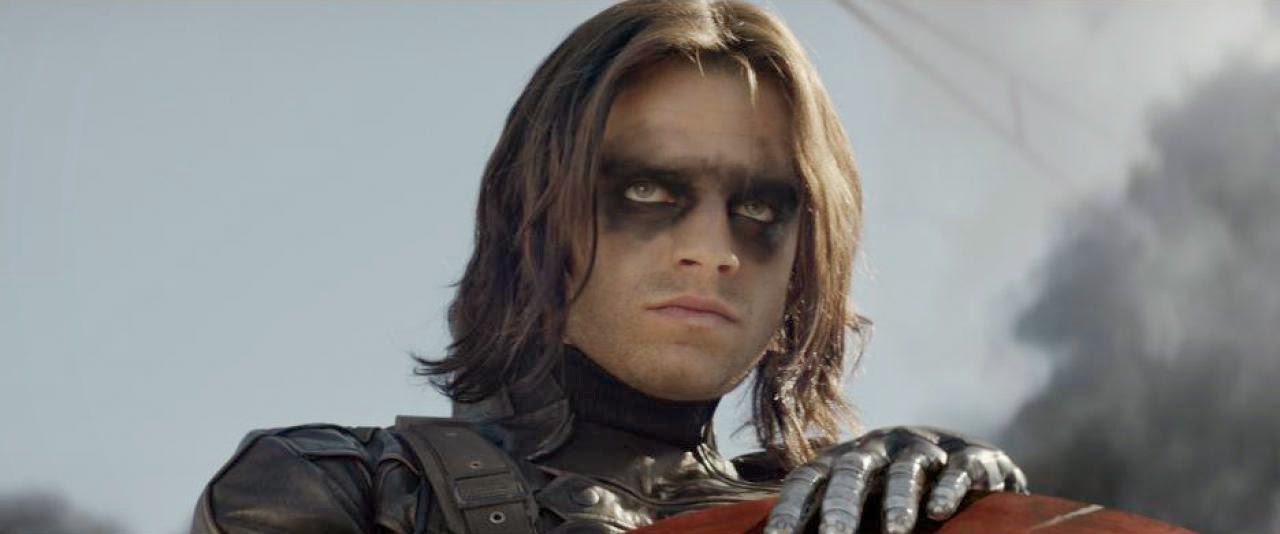
Part 4: The Tragedy of Bucky Barnes.

With a movie of this scale, I tend to fixate on what happens after the end credits roll. Not in an "I'm really looking forward to Sebastian Stan crying in the sequel!" way (although obviously that's a given), but in the sense of what impact Steve Rogers' actions will have on the rest of the world. I find it disappointing when movies just focus on the main characters and hit the reset button on the rest of the universe, as if the only people effected by a deadly supervillain/apocalypse are the hero and supporting cast. Luckily, the scope of the Marvel Cinematic Universe has given us a far better chance to see how the world changes and develops over time.


People love to point out the little details that link Marvel movies together, like Sitwell's offhand mention of Dr Strange. But to be honest, this type of in-universe worldbuilding is pretty easy. The MCU's real strength is the way it portrays a world with a realistic history and contemporary culture, rather than following the more familiar method of plopping a superhero into a city with no hints of influence from the outside world.

From the first Iron Man movie onwards, the existence of superheroes is something that has directly influenced everyday life in the MCU, from the legal ramifications of Tony Stark's unlicensed "prosthesis" to the way he markets himself as a celebrity hero, to his decision to move from weapons manufacturing to clean energy and robotics. By the time we reach Avengers, we've seen more than a glimpse of how the rest of the world is changing as a result. Agents of SHIELD was a stroke of genius because it shares more of the everyday nuts-and-bolts stuff that we're ever going to see in the actual movies. (Note to anyone who stopped watching after the first few episodes: AoS is so awesome now. Persevere.)

Captain America is the strongest strand in this worldbuilding web because he's the first publicly recognised superhuman in the MCU. He gives us a link between the Red Skull in the 1940s, and the present-day world of SHIELD, the Avengers, and the ever-growing pantheon of weird 21st century tech and superhuman characters. Fittingly, CATWS was the first movie to give us a truly in-depth look at the non-superheroic side of the MCU.


A typical superhero/adventure movie ends with the hero defeating the villain, plus some kind of set-up for a sequel. Just to be clear, I have zero problem with this. A simple storyline doesn't necessarily preclude good writing. However, one of the reasons for the popularity of this formula is the fact that big-budget filmmakers are leery of making things "too complicated" in case audiences don't show up for later sequels -- a theory that's now been obliterated by the increasingly complex nature of the MCU. Marvel Studios loves worldbuilding, and their movies are better as a result. 

The events of CATWS have turned the MCU on its head. SHIELD is not only rotten to the core, but functionally dead. The Avengers no longer have the support structure of a rational, government-funded backup to help clear things up after the next alien invasion. Fury is in hiding. Natasha is now a public figure. Coulson and his team are on the run. Thanks to Natasha's Snowden-esque leak, anyone with internet access can now read everything from SHIELD's black ops missions to the Helicarrier specs to Hawkeye's psych evaluations. Civilians now know precisely how much SHIELD has been hiding from them all these years, and therefore people are likely to react differently to superhuman threats (and heroes) in the future. By sheer force of numbers, "normal people" are now more powerful and influential than the strongest of the Avengers.


Avengers was the most high-impact movie before this, but for obvious reasons it didn't show much of its own aftermath. Iron Man 3, much like its prequels, focused on Tony Stark's life and emotional journey rather than on the outside world -- although it was still a direct follow-up from Avengers, because one of the main themes was Tony struggling with PTSD resulting from the Chitauri attack. Thor: The Dark World told Loki's side of the post-Avengers story and spent half of the time on alien planets, meaning that there wasn't much room for earthbound worldbuilding. But Captain America? He was the perfect choice to show us everything else, not just because we already knew he was working with SHIELD (i.e. the Avengers' most direct link to the civilian population), but because Cap has always been a hero of the people.


It would be a waste of a movie to just have Steve Rogers face off against some supervillain all by himself. Even in The First Avenger, he was backed up by Bucky, Peggy and the Howling Commandos. Before that, his first mission as Captain America was as a propaganda icon, a foundation for his later role as an in-universe historical/comicbook hero. Basically, Cap is public property. Even his origin story is all about collaboration, with Dr Erskine and Howard Stark working to build a supersoldier, rather than Steve's powers being an accident of birth, magic, or science.

Cap is pretty unusual in that his battles aren't personal so much as idealogical. Most supervillain/hero conflicts are a combination of personal rivalry (Lex Luthor/Superman, Thor/Loki, Tony Stark/Obadiah Stane, etc.) and the supervillain Doing Something Evil That Must Be Stopped. In the MCU, Captain America doesn't really have an arch-enemy in that sense. He just fights bad people, which he'd already been trying to do before he got the supersoldier serum. This attitude is why it makes sense for Steve to be working for SHIELD in CATWS, while Tony Stark continues to stay on the sidelines. Steve wants to help, and he feels that SHIELD is the place where he can most effectively put himself to good use.

This also ties into the way Steve straddles the line between human and superhuman, meaning that it's still ethically acceptable for him to be going toe-to-toe with normal people. Captain America can be surprisingly indiscriminate in the kind of bad guys he decides to take down, because unlike Superman (who can kill more or less anybody without breaking a sweat) or Tony Stark (who is richer than god and can blast you out the sky with his near-indestructible robot suit), it doesn't feel like overkill to have Steve go up against someone like Batroc. Sure, he's stronger and faster than an ordinary human, but he's not so strong and so fast that you see him having to rein himself in. His enhanced physical abilities are a tool rather than a weapon of mass destruction.

In The First Avenger, Steve's battle with the Red Skull only becomes personal after Bucky dies. CATWS mirrors this because Cap's plan to defeat HYDRA is all very strategic and practical until he discovers that Bucky is the Winter Soldier, at which point all bets are off. All those comparisons between CATWS and spy thriller movies are apt, because the story structure isn't particularly superheroic: Cap goes out of his way first to identify the enemy, then to investigate what's going on, and finally to gather a team and face up to that threat. This is a perfect fit for Steve Rogers' characterisation as a commanding officer and as a guy who always goes out of his way to do the right thing, and it also highlights the significance of him risking everything to keep Bucky alive at the end.


The disaster movie genre has been around forever, but recently there's been an uptick in the number of summer blockbusters that illustrate their impact with colossal infrastructure damage. This may be Michael Bay's fault, and I don't find it very effective because with a PG or PG-13 rating in mind, no amount of toppling skyscrapers will feel meaningful.

This feels particularly bizarre when you consider America's obsession with urban terrorist attacks. Hollywood movies regularly include disasters that are ten or even a hundred times more devastating than 9/11, but they zoom out until all you're experiencing is grey concrete dust, tiny people running around like ants, and the distant vibration of a dramatic bass soundtrack. The true impact of such a disaster quickly becomes bloodless, distant, and sanitized.

I find it quite unpleasant to watch this kind of movie that implies vast amounts of civilian casualties, but cleanses that loss by removing its bloodshed and viscerality. I'd rather have a supervillain cause the meaningful death of one character we actually care about, than have him destroy fifty skyscrapers full of nameless civilians whose deaths are reduced to a silent, PG-rated nonentity. I'd rather have Obi-Wan Kenobi say "It was as if millions of voices suddenly cried out in terror and were suddenly silenced," than watch another CGI shot of buildings falling like dominoes, with no sign of who was inside. CATWS wasn't perfect in this regard, but it had three things counting in its favour:
  1. Whenever action scenes took place in a public space, it was a situation where the heroes had no choice but to stand and fight -- or drive wherever there was still space on the road. There were very few situations where the good guys could have caused the deaths of innocent bystanders, which is more than you can say for Man of Steel.
  2. The inevitable "huge things crashing into each other" scene was when Team Steve took down the Helicarriers, and there was an actual reason for them to be crashing, unlike the endlessly disaster-prone skyscrapers I keep seeing in other movies. Also, the people in the Helicarriers were explicitly shown to be enemy combatants, and Steve already gave them every opportunity to leave their posts.
  3. The scene where Natasha desperately yells at civilians to get to safety. (Which, incidentally, is one of the very few scenes where one of the heroes actually has a chance to do something to help nearby civilians, because most of the time they're already running for their lives as well.)
Take a look at Avengers, Star Trek Into Darkness and Man of Steel. All three include scenes where major population centres are heavily damaged by attacking alien forces, but Avengers is the only one that attempts to humanize the situation. Captain America is on the ground, coordinating police to get civilians to safety, while the rest of the Avengers keep the Chitauri attackers inside a five-block radius to avoid more buildings being damaged. In Man of Steel and STID, buildings collapse and thousands of civilians die invisible offscreen deaths that in the case of MoS, are at least partly the fault of Superman himself. Meanwhile in the Marvel universe, an entire movie (Iron Man 3) was dedicated to the trauma of that attack, with Tony Stark exhibiting classic PTSD symptoms and building hundreds of Iron Man suits in an attempt to shield himself from (possibly imaginary) threats.


Superhero movies often seem to use civilian casualties as a kind of points system: "Choose between saving a schoolbus full of children, or saving your girlfriend!" The goal of superheroism is to protect the helpless from superpowered threats, but I feel like The Avengers is the only recent urban-warfare example that does this in an practical fashion. In the MCU, the main characters interact with the rest of the world in an organic and believable way, and CATWS was the most ambitious example of that so far.

This genre is always going to require a certain amount of suspension of disbelief. For example, the concept of secret identities has always been kind of ridiculous, and is now even less plausible than it was before. Given the level of surveillance technology now available, Spider-Man and Batman would have been unmasked within days of becoming public figures. However, for those stories to keep being told in any recogniseable fashion, the issue of secret identities must simply be ignored. And personally, I don't have a problem with that. What I do have a problem with is when a hero repeatedly defeats various supervillains in a very public and dangerous way, and everyone else just keeps... living on as normal.

Character-wise, one of the most significant worldbuilding decisions in the MCU was to make all of their heroes completely public. Steve Rogers is famous enough that Sam Wilson could recognise him in the park. Tony and Pepper are already celebrities, of a sort. All of the Avengers are now mythologised with in-universe memorabilia. In fact, the only characters with anything remotely resembling secret identities were SHIELD agents like Hawkeye, Fury and Black Widow, who are the least "super" of the main Avengers team. Following CATWS, even Black Widow is a public figure, appearing on TV to testify about the SHIELD/HYDRA document leak. She is now the Edward Snowden of the MCU.


The MCU doesn't really require the kind of suspension of disbelief needed to continue watching Spider-Man movies, where New York cops continually fail to shoot the Green Goblin out of the sky. First of all, the scope of the MCU allows us to get a closer look at things like SHIELD, which explains how superhuman/alien phenomena have stayed secret for so long. SHIELD also shows how normal humans react to the sudden appearance of people like Thor and Captain America. Secondly, the hero/villain conflicts in the MCU are not confined to just the hero and the villain, but have a solid foundation in the world "outside." Even Malekith in Thor: The Dark World (probably the most two-dimensional villain so far) was shown in terms of the real consequences of his actions, with that tear-jerking Asgardian funeral scene.

Most importantly of all, the human characters in the MCU are just as significant and powerful as the superhumans. Nick Fury is undoubtedly more powerful than any of the Avengers: he's their boss. Peggy Carter and Howard Stark helped found SHIELD, an organization that spent decades shaping the way the world would react to people like Thor and Iron Man. Pepper Potts and Jane Foster both have an ongoing impact on the world around them. Phil Coulson is the catalyst that brings the Avengers together in the first place.

In CATWS, we see this expand to its greatest extent so far, with Agent 13 and crowds of other SHIELD agents making the decision to ignore their orders and fight alongside Cap. By elevating the importance of human/civilian characters, the MCU creates a far more complex and believable world than most other superhero movies -- and all without disempowering its heroes.

Tweet

Follow on Tumblr: hellotailor.

Continued in:

Part 6: Costuming and design: Steve & Bucky
Part 7: Costuming in CATWS: Nick Fury, Black Widow and S.H.I.E.L.D.
Read More
Posted in captain america, marvel, movies, SHIELD, superheroes | No comments

Friday, April 11, 2014

Captain America: The Winter Soldier -- The Tragedy of Bucky Barnes

Posted on 11:46 AM by christofer D
Part 1: "Trust No One" -- How Captain America became the gritty superhero we never knew we wanted.
Part 2: HYDRA, Sitwell, and diversity in the Marvel universe.
Part 3: Black Widow and Falcon.

Bucky's role in this movie is the point where Marvel nerd and non-nerd audiences part ways. Going by the reactions I've seen from film critics and my non-fan friends, Captain America: The Winter Soldier was an entertaining popcorn flick that probably should've had more dialogue and fewer action sequences. But if you go by Captain America fandom, EVERYTHING ABOUT THIS FILM WAS AGONY AND LIFE IS A WORTHLESS HELLSCAPE UNTIL STEVE AND BUCKY CAN BE TOGETHER AGAIN.

Needless to say, I fall into the latter camp. If you want to preserve the illusion of this blog as an impartial source of pop culture analysis, stop reading this post and wait for the next part of the review, because I have A Lot Of Feelings about Steve Rogers and Bucky Barnes.


Marvel Studios movies are very good at making everything equally engaging for new and old audiences alike, but I suspect that Winter Soldier was their first stumbling block. CATWS has inspired an overwhelmingly positive audience response so I wouldn't describe this issue to be a "failure," but there's clearly a gap between people who came into the movie already invested in Bucky Barnes, and people who didn't. It's kind of like if someone made a movie about Sherlock Holmes' return from the dead, but half the audience were only familiar with Watson and therefore didn't understand why everyone was freaking out over the dead guy who reappeared an hour and a half into the movie.

I saw several reviews that pointed out the Winter Soldier had very little screentime for a title character -- in fact, that the film more or less could've stood up without him. And from a plot perspective, I suppose it could. They could've swapped him with any old assassin character, and the plot would've worked out just fine. Except this fails to take into account the fact that Bucky is the emotional core of the Captain America story thus far. To fully understand this, we need to go right back to the beginning of the first movie, when Steve and Bucky were growing up together in Brooklyn.


I've already written about how lonely and miserable Steve Rogers is throughout CATWS, but I think it's fair to say that he's not just lonely for all the friends he lost in the 1940s -- he's lonely for Bucky, specifically.

"Even when I had nothing, I had Bucky," he says, when he finds out who the Winter Soldier truly is. Steve certainly misses Peggy and the Howling Commandos, but that loss is bittersweet. He at least knows that Peggy lived a long and happy life, and besides, he only knew Peggy and the Commandos for a few months, whereas he and Bucky had been living in each other's pockets since childhood. Steve's scene with Peggy is upsetting because it's the one moment that really highlights the time travel aspect of the Captain America story: he can never go back. Peggy went on without him -- she had to.

But Bucky's absence is more like (to use a rather inappropriate analogy) a missing limb. Not only did Bucky never get anything remotely approaching a happy ending, but Steve never really got any practice at functioning without him. Within days of Bucky's death, Steve was piloting an aircraft into the ocean, and when he woke up he was thrust straight back into active service, in a totally alien environment but with SHIELD governing his every move -- even stationing a spy at his door.


Even in the 21st century, Steve is still living in the middle of a war story -- or a post-war story, as he fails to get the closure he needs because he never really "came back" from WWII. The soundtrack even includes a classic wartime love song about missing and then being reunited with your sweetheart, It's Been A Long, Long Time:

"Haven't felt like this, my dear
Since I can't remember when.
It's been a long, long time.

You'll never know how many dreams
I've dreamed about you.
Or just how empty they all seemed without you.
So kiss me once then kiss me twice
Then kiss me once again.
It's been a long, long time."

Steve has a copy of this song in his apartment, and the lyrics really could fit with anything: Peggy ("Kiss me once again."), Bucky ("Haven't felt like this since I can't remember when.") or even just his old life in general ("You'll never know how many dreams I've dreamed about you."). Honestly, it's quite astonishing how much misery this movie manages to pack into two hours of action sequences and espionage subplots, especially since Captain America is supposedly one of the "lighter" superheroes, compared to the unending grimdarkness of Batman. I guess this is the difference between "manpain" and "a man in legitimate emotional pain."


By this point Steve already been in the 21st century for about two years, and we don't see much evidence that he's failing to deal with the 21st century as a concept. He's a resilient guy, after all. What we do see is him being horribly lonely and no longer displaying much of the optimistic, target-oriented attitude we see in the '40s. I suspect that if Bucky was still with him, things would be very different.

The thing is, Steve and Bucky's friendship wasn't just a "they grew up so they're as close as brothers," thing, it's way more dynamic than that. Their relationship may be symbiotic, but it was never particularly balanced. Growing up, Steve was sickly and physically weak but had precisely the same personality as he does now: unendingly hopeful and moral, but with no conception of backing down from a fight. Hence why he's constantly getting beaten up, with Bucky having to wade in and finish those fights for him. Bucky is incredibly protective of him, which must have caused a fair amount of confusion when Steve turned into a near-indestructable supersoldier.


It's a classic partnership between idealism (Steve) and pragmatic cynicism (Bucky), with Bucky playing the role of Steve's protector and #1 fan. It takes the supersoldier serum for everyone else to realise what Bucky knew all along: that Steve is an inspirational figure, destined for great things.

There's this beautiful transitional moment in the first movie when Steve has just rescued Bucky and the other soldiers from the Red Skull's lab, and Bucky calls out for everyone to cheer for Captain America. This is the first time Steve has received outside recognition for being the person he is, and you can tell that while Bucky's happy for him, he's also a tiny bit resentful because he knows Steve is no longer "his". The tables have turned, and now Bucky is walking in Steve's shadow, rather than the other way round.

GIFs by rogersbarnes
Before, Steve had resented Bucky for his physical strength and the way he was able to get into the army while Steve was repeatedly marked down as physically unfit for duty. After he becomes Captain America, the tables begin to turn, with Bucky probably recognising that Steve's strength and heroism come at a price (to their friendship, at least). But in the end that resentment between them doesn't matter, because whichever way you flip it, they define each other.

CATWS purposefully sets up tons of parallels between them -- Steve falling from the Helicarrier just like Bucky fell from the train, Bucky being defrosted, Bucky being strapped down in the chair like Steve was when they gave him the serum, Bucky being physically "improved" in a twisted mirror-image of Steve's supersoldier perfection, the pair of them facing off along that walkway on the Helicarrier -- which serve as a constant reminder of how closely their stories are intertwined. Even when Bucky isn't onscreen, he's still always lurking in the background, out of the corner of Steve's eye.


The most significant moment is surely the end of their showdown on the helicarrier, when Steve finally gives up. For the first time ever, he backs down from a fight. Why? Well, he certainly can't bring himself to kill Bucky. But there's also the fact that fighting Bucky no longer serves any purpose. Steve doesn't really have anything to live for if Bucky doesn't remember him, and he's already fulfilled his mission by bringing down the three HYDRA helicarriers. Bucky isn't the "enemy," he isn't a bully, he's just a malfunctioning weapon who can't help what he's been programmed to do.

This is the point where I flush all my emotions down the toilet and go to live in an igloo made of frozen tears, because what the hell. This is a goddamn SUPERHERO MOVIE where the denouement is the hero surrendering because he can't cope with living in a world where he's killed his best friend. Earlier on when Steve tells Sam that he doesn't want to kill Bucky, he's not just saying that he can't kill Bucky, he's tacitly admitting that he might even fuck up the whole mission and endanger millions of lives because he can't use lethal force against his friend. Then Captain America just casually drops his shield into the Potomac, because he knows he isn't coming back from this.


Watching CATWS the second time, one thing that really hit me is how brilliant Sebastian Stan's performance is. He may not have as big a role as Nick Fury or Black Widow, but by god does he make his limited screentime count. In particular, every one of his action sequences stands out because his fighting technique is so much more brutal than anything else onscreen. Steve's fighting style is designed to be this combination of extreme gymnastic ability and slightly old-fashioned martial arts techniques, and Black Widow's style is beautifully fluid, but in the end the Winter Soldier is just terrifying.


Compared to the badass but relatively generic hand-to-hand scenes between Steve and the various HYDRA goons, the Winter Soldier is a whirlwind of pure death. He tears the steering wheel right out of Steve's car. He skids across the road, using his metal hand as a brake. Hilariously, he stands right in front of Fury's car to blow it up, which kind of does away with the Winter Soldier's image as an invisible ghost.

In the middle of a film that's all about shades of grey and working out who you can trust, the Winter Soldier is simultaneously the scariest character in the film... and never really "evil." He's single-minded and brutally violent, but he never gives the impression of being unpleasant in the way of Alexander Pierce, Sitwell, or any of the HYDRA footsoldiers.

I've seen a handful of comparisons with Loki because they are both, I suppose, "ambiguous villains." But to me they honestly seem like polar opposites. The whole point of Loki is that he's easy to understand and empathize with as a character, but he's still a cruel and malevolent person. Plus, most of his decisions boil down to, "Because I want to." Beside him, the Winter Soldier seems like a motiveless vacuum, devoid of emotional responses or desires until Steve shows up to knock a hole in the wall between Bucky and his memories.


So yeah, by the time we get to the two or three scenes where Sebastian Stan actually gets to act with his face and voice, I am a shriveled husk of my former self. Thor and Loki's relationship is probably the most fleshed-out and compelling in the MCU, but the death and resurrection of Bucky Barnes still manages to be a goddamn operatic tragedy in about a tenth of the screentime.

This entire movie is basically a set-up for Steve's quest to find the Winter Soldier and bring Bucky in from the cold in the next movie, and their tiny handful of scenes together is enough for me to pack my belongings and move to a cabin in the woods where I can cry in peace. But before I do that, let's talk about why Sebastian Stan deserves 500 Oscars.


First up, well done for managing to illustrate the true meaning of Bucky's Red Room/HYDRA mind-wipes in just one scene.

The Winter Soldier's relationship with Alexander Pierce is a direct parallel to Steve's relationship with Nick Fury. Steve is able to doubt Fury's trustworthiness because he has such a solid bedrock of moral certainty, but Bucky never had that luxury, even back when he was fully himself. Now, Bucky's mind is a quicksand, and Pierce may be the only vaguely familiar face he knows. Having imprinted onto Pierce like a baby duckling, why not believe him when he says the Winter Soldier "shaped the century"? (Yet another parallel between Steve and Bucky, by the way: Captain America shaping the world as a heroic icon, while the Winter Soldier shapes things from the shadows, carrying out anonymous assassinations on behalf of HYDRA.)

The Winter Soldier's facial expressions are almost childlike here, and the way he passively accepts that mouth guard tells you everything you need to know. He could probably kill everyone in the room within seconds, but instead he just lies back and lets them torture his brain to mush for the hundredth time. Before now he seemed like such an intimidating figure, but this scene shows the Winter Soldier what he really is: a little kid or a blank slate into which people insert their own goals and missions, fully-formed.

"But I knew him," he says in miserable confusion, certain that he recognizes Steve's face from somewhere. But Pierce, the voice of God, refuses to explain any further. THIS IS JUST. TOO. UPSETTING. Sebastian Stan's entire acting career of weeping while being emotionally abused by unpleasant father figures has all been leading up to this role, and I for one am not amused.


Just in case the general emotional trajectory of this movie was to cheerful for you, the happy ending is Steve Rogers waking up in hospital after voluntarily falling to his death. Good news, Steve! Your best friend is alive enough to only half beat you to a pulp. And now he's wandering around D.C. trying to get his memory back, looking even less healthy than he did when he was in full brainwashed assassin mode. If Captain America 3 doesn't include at least one emotional embrace and/or scene where Falcon forces Bucky go to therapy, then I'm leading a mass revolt on Marvel Studios HQ, you mark my words.

Tweet

Continued in:

Part 5: Worldbuilding in the MCU
Part 6: Costuming and design: Steve & Bucky
Part 7: Costuming in CATWS: Nick Fury, Black Widow and S.H.I.E.L.D.

Follow on Tumblr: hellotailor.
Read More
Posted in avengers, captain america, marvel, movies, superheroes | No comments

Monday, April 7, 2014

Captain America: The Winter Soldier review, Part 3 -- Black Widow & Falcon

Posted on 12:11 PM by christofer D
Part 1: "Trust No One" -- How Captain America became the gritty superhero we never knew we wanted.
Part 2: Hydra, Sitwell, and diversity in the Marvel universe.

Making Captain America: The Winter Soldier an ensemble cast movie was a smart decision. Not only does it make sense to position Steve Rogers as a team leader rather than a solo hero, but it avoids the tired formula of superhero + love interest + villain, plus supporting cast of sidekicks and parental figures. Steve may still take the central role, but characters like Nick Fury and Black Widow certainly don't fall into any of those categories.

As Marvel Studios slowly begins to explore other genres (Thor as an operatic fantasy, Guardians of the Galaxy as a space epic...), they can branch out into building characters with more depth and ambiguity than the traditional superhero formula allows.


I already discussed this in the first part of my review, but basically it would've been a mistake to try and build a typical 21st century superhero story around Steve Rogers. After all, his "superpowers" pretty much boil down to enhanced strength and healing abilities. There are already so many action movies about supposedly normal humans performing superhuman stunts (think of John McClane's progression from middle-aged everyman in Die Hard to indestructible teflon droid in Live Free or Die Hard) that Cap's physical strength runs the risk of seeming unimpressive when compared to, say, Iron Man.

Instead, this movie is more about the importance of teamwork and good leadership: a perfect development for a character who went from standing up to schoolyard bullies to selling American military propaganda to leading a close-knit group of commandos into Nazi-occupied Europe. Captain America's image as a hero is more about personality and symbolism than it is about Steve Rogers' ability to fall 50 feet without breaking his knees. 

Black Widow

There are far too many misconceptions about Black Widow's role in the Avengers franchise, either caused by people's existing prejudices (i.e. the assumption that any woman in a "catsuit" is just there for sex appeal), or because her characterization is subtle when compared to her larger-than-life superhero counterparts. Characters like Tony Stark and Falcon are easy to understand on a superficial level, but Black Widow tends to get overlooked because her emotions and motivations are often so obscure.


Last week I wrote an article about the way professional critics responded to Black Widow in The Avengers and CATWS, highlighting how many of them simply couldn't look past Scarlett Johansson's image as a sex symbol. Regardless of how good you think the Avengers movies are in general, it's just plain inaccurate to suggest that Black Widow is written as overly sexualized or two-dimensional. It was depressing to see how many well-respected critics assumed Black Widow's purpose was just to "kick ass" or provide eye candy, when her role is so explicitly cerebral: interrogating Loki, strategizing with Cap, and working with SHIELD to evaluate who should join the Avengers team in the first place.


After I first saw Avengers, one of the guys I watched it with immediately asked if I was irritated by the one scene that supposedly gives us a "male gaze" view of ScarJo's body: a full-body shot that showed Black Widow's back while she was interrogating Loki in the helicarrier. The thing is, to me this didn't even feel like a "male gaze" view at all. This type of movie is usually full of scenes where the camera pans up and down a woman's body for no reason, but in that scene all we really saw was a view of Black Widow from behind, as she stood and talked to Loki.

Sure, it was Scarlett Johansson in a tight bodysuit, but it was on precisely the same level as an earlier scene where we see Steve working out in a tight white t-shirt. CATWS had one vaguely male gaze-y shot of Black Widow in her catsuit... but then she spent the rest of the film in hoodies, jeans and leather jackets. This isn't so much a case of ScarJo being sexualised by the filmmakerss, but of viewers sexualizing her because, well... she's hot. You could say exactly the same thing of half the male actors, particularly since Cap, Bucky and Thor have all had at least one shirtless scene so far. The main difference is the all-too-common assumption that a hot female character is just there for decoration/sex appeal, whereas a hot male character is hot in addition to being a character in his own right.

CATWS gave us the most complex look we've seen of Black Widow so far. Her characterisation was just as subtle as we've come to expect, but this time round it fit much better with the film's overall tone as an espionage thriller. Plus, she was actually given second billing on the cast list, which is unheard-of for a female character who isn't a love interest.

In the action/adventure genre, we typically see movies that focus on either a male hero with a female love interest, a team where men outnumber women by about five to one, or a female hero wjth large supporting cast of men to "balance it out." Black Widow is a rare example of a female action movie character being given the kind of platonic ally/partner role that would usually be taken by a dude.


For me, the most revealing Black Widow moment was right at the end, during the graveyard scene. In her three MCU appearances so far, Natasha is characterized as competent, reserved, analytical and untrusting, with a very dry sense of humour. The breakdown of SHIELD exposed more of her emotional vulnerabilities, particularly when Fury "died" and then revealed that he didn't trust Natasha enough to let her in on the secret.

It now seems likely that she was feeling miserable all along, but this only becomes apparent at the end, when she's suddenly all smiles and excitement at the prospect of forging a new life for herself. After the horrifying discovery that she went from the KGB to a supposedly "good" organization that was actually rotten to the core, she's finally at a point in her life where she no longer takes orders from anyone. So while she's definitely less of a basket case than Steve Rogers, that graveyard scene gives us some perspective on how much effort had gone into her expressionless and intimidating demeanor at SHIELD.

One slightly bizarre comment I saw the other day was that all those "you should date this girl from the office" scenes between Natasha and Steve were somehow too ~stereotypically feminine~ for Natasha. Like... don't talk about people's love lives, because it's too girly? Or something? I don't subscribe to that interpretation, partly because I doubt the writers were trying to characterise Black Widow as a tween girl at a sleepover, and partly because there are so many more interesting ways to look at those conversations.


Natasha is incredibly perceptive, and no doubt understands that Steve's problems have less to do with his fish-out-of-water situation, and more to do with his crushing loneliness. Steve gives every impression of genuinely liking people, but he's lost everyone he ever knew and is surrounded by people that he doesn't really trust. He's so lonely that he's at the point of having intensely emotional conversations with a guy he met while jogging at the park, so Natasha is making the effort to help him improve his social life. All of those girlfriend recommendations also come with a subtextual hint that she doesn't want to date him, thus discouraging the possibility of him getting too attached. She's purposefully putting herself in the role of team member rather than potential love interest, and as a result they seem to have a pretty close relationship already -- or as close as you can ever get to Black Widow.

Falcon

One of the very few ~spoilers I heard before I saw this movie was that in terms of storytelling tropes, Sam Wilson's role was very similar to that of a love interest. And you know what? It totally was.


Right from the first time he appears onscreen, Sam is characterized as an appealing and fundamentally good character. It wouldn't be an exaggeration to describe that park scene as a meet-cute, with Steve being so drawn to Sam that he has to befriend him, and Sam being so open and receptive that he invites Steve to come visit him where he works.

On their second meeting, Steve is impressed by Sam's work as a counselor for military veterans, and the two of them almost immediately open up to each other about intensely personal aspects of their lives: the death of Sam's best friend, and Steve's uncertainty about his life in the 21st century. This exchange has such an impact that Steve feels able to show up on Sam's doorstep as a fugitive, and Sam is willing to risk his life to fight alongside him. The film ends with the implication that Sam is going to quit his job to go help Steve track down the Winter Soldier.


Bear in mind that I'm not saying "Falcon is literally Cap's love interest," but rather, "Falcon's role is structured like a love interest in a typical superhero/action movie." Another thing that supports this interpretation is the fact that he is by far the most emotionally balanced character in the entire movie. He's also explicitly characterized as being a nurturing kind of person, working as a group counselor at the VA and encouraging Steve to discuss his feelings.

In most superhero movies, the (female) love interest is a calming influence, without any serious emotional problems of her own. Hilariously, the only exception that comes to mind is the incandescently awful Spider-Man 3, in which Peter Parker proves himself to be a terrible boyfriend on multiple fronts, including belittling Mary Jane's low self esteem to her face. If you look at love interests like Pepper Potts, Lois Lane, and Jane Foster from the Thor movies, they're all on a relatively even keel when compared to the rampant emotional problems and/or traumas faced by their superhero boyfriends.

Now, this is partly because Iron Man, Batman etc. are obviously The Heroes, and therefore their various daddy issues and moral dilemmas take up far more screentime than whatever is going on in their girlfriends' lives. But it's also because those female love interests tend to take a supportive role, with most of their personal conflicts having something to do with their boyfriend, such as his secret identity or the dangers of his work as a superhero. Don't get me wrong here, I think Pepper Potts and Jane Foster and Lois Lane are all brilliant characters. But my point is that Sam Wilson's role is directly comparable to the way they interact with Tony Stark, Thor and Superman.

I have no idea if this was intentional or not, but the simplest explanation is that Falcon had to be introduced in a way that he could plausibly fight alongside Cap and Natasha after just a handful of scenes. The easiest way to do this was for him to be the friendliest, most likeable dude ever, which was helped along by the fact that Anthony Mackie could have chemistry with a rock. Seriously, he was pure joy to watch. GIVE ANTHONY MACKIE A FALCON MOVIE AT ONCE. And don't infuse it with excess manpain, make sure it's properly balanced like the Thor movies, which show Thor as a friendly and optimistic person who just happens to end up in difficult and depressing situations. Sam Wilson is my only hope for any of the Avengers getting some decent therapy, and oh boy do they all need therapy.

Tweet

Part 4: The Tragedy of Bucky Barnes
Part 5: Worldbuilding in the MCU
Part 6: Costuming and design: Steve & Bucky
Part 7: Costuming in CATWS: Nick Fury, Black Widow and S.H.I.E.L.D.
Read More
Posted in avengers, captain america, marvel, movies, superheroes | No comments

Saturday, April 5, 2014

Captain America: The Winter Soldier, Part 2 -- HYDRA, Sitwell, and diversity in the Marvel universe

Posted on 1:28 PM by christofer D
Previously: Part 1: "Trust No One" -- Steve Rogers as the ~gritty superhero America deserves.

When it came to using HYDRA as the antagonist once again, Winter Soldier's writers were caught between a rock and a hard place. At face value, the concept of an evil organization infiltrating SHIELD is perfect for the Winter Soldier storyline ("You shaped the century.") and can be linked in with real-world concerns about PRISM and drone strikes.

Unfortunately, the filmmakers couldn't really create a new, more plausible evil conspiracy when they already had HYDRA ready and waiting in the sidelines of the Captain America mythos. This meant they then had to try and legitimize a scenario where thousands of SHIELD agents decided to join a blatantly evil secret society with roots in a Nazi cult -- without ever being detected. And, in many cases, without a clear-cut explanation for why they joined in the first place.

With a villain as wide-ranging as HYDRA, they had to give us a few entry characters to illustrate different aspects of the organization. Zola represented the cartoonishly evil Nazi backstory, while Alexander Pierce had a more pragmatic explanation for why he believed in HYDRA's goals. The weakest point was Agent Sitwell, as he was seemingly introduced as the "human" side, almost like the evil equivalent of Coulson's benevolent middle-management schtick in Avengers.

I understand why they chose Sitwell: He's an established character, and having him turn traitor was proof that HYDRA had been there all along, lurking under everyone's nose. Except by putting Sitwell in that role, we're now supposed to believe that this previously friendly dude has secretly been really evil all along, to the point of conspiring with lecherous senators and plotting to kill millions of people.

And yet the movie never provides us with an explanation for why he decided this was a good idea, or why nobody ever noticed. By bringing Sitwell front and centre like this, they accidentally highlighted the lack of plausible motives for becoming as a HYDRA spy.


Correct me if I'm wrong, but I'm pretty sure Sitwell is the only Latino character in the Marvel Cinematic Universe. So while we're meant to be feeling betrayed that a familiar character turned out to be a bad guy, I think many fans are more likely to feel betrayed about the fact that it was Sitwell, specifically. After all, Sitwell isn't actually a person, he's a character who a team of filmmakers decided would best serve the story by turning evil and then dying.

Let's take a look at the trajectory of the two main SHIELD agents we see as background characters throughout the MCU: Coulson and Sitwell. Now, I love Clark Gregg as Coulson, and I think he deserves his role in Agents of SHIELD. But CATWS basically tells us that out of two recurring characters with similar roles in the franchise, the white guy was pushed to have a well-developed storyline and a huge fanbase, while the Latino character's most significant contribution was to inexplicably become an evil minion, and then a corpse.


Just to counterbalance what I've said about Sitwell's role, it's also worth pointing out that CATWS is still way more diverse than any other superhero movie in recent memory. Which is kind of a dubious honour considering Hollywood's incredibly low bar for this kind of thing, but whatever.

Out of the central cast of good guys (Cap, Falcon, Black Widow, Fury, Maria Hill and Agent 13), only one of them was a white guy, and everyone had distinct and engaging characterization. (N.B. You can read my thoughts on X-Men: First Class here. With such a big ensemble cast the X-Men series has the opportunity to reach miles ahead of any other current franchise, but they wind up shooting themselves in the foot over and over again.)


I just hope that Marvel isn't going to just going to reach this point and then plateau. There's a lot of talk in comics fandom about how the Marvel universe is far more diverse than DC, and how Marvel Studios is better than anyone else when it comes to movie adaptations. However, we're still at the point where Marvel is praised for the Thor franchise being "girl-friendly" because it has emotional depth and three female characters who aren't love interests. CATWS manages five whole women, which seems mindblowingly impressive until you notice the fact that a) the movie doesn't even pass the Bechdel Test, and b) virtually every background character is a dude.

Just to clarify, I'm not all up in arms about CATWS, and obviously I enjoyed it both as an action movie and as an addition to the MCU. This is just a reminder that even in a relatively well-thought-out movie like this, we're still measuring our standards of diversity and gender representation by the extremely low bar of "average Hollywood blockbuster," a genre that currently boasts such masterpieces as Expendables and Transformers.

Having successfully established a couple of female side-characters like Maria Hill and Agent 13, perhaps Marvel can now work their way up to something vaguely approaching gender parity for the background cast (LOL, this will never happen), or even give Black Widow her own movie. Because seriously, it's kinda ridiculous that Ant-Man and Guardians of the Galaxy got there before her.

Tweet

Continued in:

Part 3: Black Widow and Falcon
Part 4: The Tragedy of Bucky Barnes
Part 5: Worldbuilding in the MCU
Part 6: Costuming and design: Steve & Bucky
Part 7: Costuming in CATWS: Nick Fury, Black Widow and S.H.I.E.L.D.

Read More
Posted in avengers, captain america, marvel, movies, SHIELD, superheroes | No comments

Friday, April 4, 2014

Captain America: The Winter Soldier, Part 1 -- Trust No One.

Posted on 11:17 AM by christofer D
Previously: The costumes and characters of The Avengers -- Captain America.


I've been rather entertained by the number of reviewers who smugly namechecked Edward Snowden while writing about this movie, but they do have a point. Captain America: The Winter Soldier is about as "realistic" as you're going to get in the superhero genre, in a way that I found far more satisfying than the stereotypical ~gritty reboot~ atmosphere of the Dark Knight trilogy.

Whether or not you're a fan of Nolan's Batman movies, I think it's fair to say that they were masterminded by someone who doesn't have much affection for the superhero genre, which is quite funny considering the overt silliness of The Dark Knight Rises. CATWS provided an excellent balance between a relatively realistic concept (SHIELD's PRISM-inspired surveillance helicarriers), and the inherently optimistic nature of Captain America as a character.
Steve Rogers may do a lot of punching in this movie (perhaps too much punching, dare I even say it), but his true superpower is his status as a role model and leader. In the end, it's Steve who decides that SHIELD is beyond salvation, Steve who inspires Falcon to join the fight, and Steve who persuades SHIELD agents to ignore direct orders because it's the right thing to do.

He's the guy with the guts to go first when confronting everyone from schoolyard bullies to his own superior officers, and you can really understand why people rally behind him as a figurehead. He doesn't have the firepower of Thor or Iron Man or the political sway of Nick Fury, but he's the one trustworthy rock in the shifting moral sands of SHIELD and HYDRA.


It's a little depressing to compare Steve Rogers to the bastardized version of Superman we saw in Man of Steel: a guy who needlessly fought a battle in the middle of Metropolis when he could've just flown it out into a field somewhere (hello, civilian casualties), and who then snapped the neck of his enemy. Meanwhile Captain America -- not just a soldier but also one of the few superheroes who wields an everyday gun -- primarily fights with a shield, and ends his final battle scene by lying down and surrendering because he'd rather die than kill a friend. I just wish there had been another scene like when he coordinates the civilian evacuation in Avengers, but that would've been logistically impossible because all of the public battles were desperate chase scenes across DC motorways.

The superhero genre has spent a long time trying (and usually failing) to bring compelling antagonists to the big screen. Either you get an excellent actor to play someone so utterly batshit that their motivation doesn't matter (i.e. The Joker), or you use a shades-of-grey villain with an comprehensible motive (i.e. Loki or Magneto). Then there's the additional problem of the end-of-movie showdown, which is usually only interesting on the first viewing, and in some cases not even then.

The Avengers has the best battle scene I've seen so far, because it pays attention to each of the characters' individual strengths rather than just being a rockem-sockem war of attrition. Captain America: The First Avenger was sadly one of the worst examples in this regard because Red Skull was a terrible villain, and the movie would've been vastly improved by just adding 20 minutes more of the Howling Commandos instead.

CATWS seems to have learned from its prequel's mistakes, and thus the structure of the final showdown follows a similar model to the Avengers, with the added bonus of having no specific Bad Guy for Steve to punch into submission. Instead, Steve and his allies have to deal with the far more amorphous problem of HYDRA, which now has less to do with battling a preposterously evil-looking Nazi cult, and more to do with the moral ambiguity the government establishment. You can tell by process of elimination that Alexander Pierce is the bad guy, but he's not all that different from Nick Fury -- which is kind of the point of this entire movie.
One of the central tropes of the superhero genre is the "two sides of the same coin" nature of a successful superhero/villain pairing. Superman mostly fights aliens (with the exception of Lex Luthor, who is the opposing figure for Clark Kent rather than Kal-El), Spider-Man deals with animal-themed scientists, Iron Man goes up against a lot of engineers and people with robot armour, and so on. Obviously there are exceptions, but as a rule, the most popular superhero/villain pairings are between characters who mirror each other in some way.
In CATWS, there's no central figure to take the position of the Red Skull. The waters are far murkier this time round. Bucky is Cap's direct opponent, but none of us really want Cap to "defeat" him. Professional kickpuncher Brock Rumlow (you know, the punch-kicky man) is evil cannon fodder. Zola is an expository prop. Alexander Pierce is the closest we get to a supervillain, but his power is more about what he represents than what he actually does. I'd actually say Cap's main "enemy" in this movie is the loneliness of his life in the 21st century.

The film never explores this explicitly, but CATWS is a story about a man with a death wish. Steve Rogers may not actively attempt to kill himself, but he tells Sam Wilson that he doesn't know how to be happy, and the opening action sequence involves Cap throwing his shield and helmet aside to have a pointlessly macho showdown with Batroc. His overall mood throughout the film is that of a lonely, unhappy person who no longer has a strong reason to keep going. He's sticking with SHIELD because he thinks they're  the only viable option, not because he actually believes in what they're doing.

The most depressing thing is that the film's "happy ending" is Steve finding out that his best friend is alive, but this is tempered by the fact that Bucky has spent the past seventy years going through unimaginable trauma. And I'm still not entirely sure if Steve had any intention of surviving the helicarrier being blown up, since he didn't make much effort to do anything except save Bucky. All this, from the supposedly cheerful and un-gritty Marvel Studios.
Steve Rogers is a fundamentally friendly guy who operates best when surrounded by a unit of soldiers he can trust, and CATWS dropped him into the polar opposite of that scenario. The tone is somewhere between a Cold War spy thriller ("Trust no one.") and a Bourne movie with Cap as the fugitive -- and the lack of a specific enemy means Cap is out of his comfort zone in more ways than one. He's forced to fumble his way through the unpleasant internal politics of SHIELD, where he is treated as a pawn by both Fury and Pierce, and has no one to turn to except Natasha and some guy he met while jogging at the park.

Honestly, I think this movie would've benefited from milking the "all my friends are dead" angle some more, or at least including one more emotional scene where Steve mourns or talks about Bucky. Hopefully we'll get some of that in the sequel. As it is, I was very satisfied by the way Marvel struck a balance by inserting their most wholesome superhero and into what may be their most unpleasant story concept so far.

CATWS was politically and culturally relevant without really supporting any ideology other than "freedom," and was about a thousand times more coherent than the incomprehensible mess of references in The Dark Knight Rises. Even taking into account the handful of ridiculous moments like Zola's bunker scene, I think this movie should be the new gold standard for realism in the superhero genre.

Tweet

Continued in:

Part 2: HYDRA, Sitwell, and diversity in the Marvel universe
Part 3: Black Widow and Falcon
Part 4: The Tragedy of Bucky Barnes
Part 5: Worldbuilding in the MCU
Part 6: Costuming and design: Steve & Bucky
Part 7: Costuming in CATWS: Nick Fury, Black Widow and S.H.I.E.L.D.
Read More
Posted in avengers, captain america, marvel, movies, SHIELD | 1 comment

Pre-Winter Soldier Marvel article roundup

Posted on 6:30 AM by christofer D
I saw Captain America: The Winter Soldier last week, but have been holding off on posting a review until it's out in the US. That hideously long review will be up either tonight or tomorrow, but until then, here are some Marvel superhero articles I've recently written elsewhere!

Wolverine Fatigue -- Has Wolverine outstayed his welcome at the head of the X-Men franchise? (Hint: the answer is yes. Please hand the reins of this political oppression allegory over to someone who isn't a white hetero dude.)

Captain America as a modern-day hero of equal rights -- One of the reasons why I'm so fond of Cap fanfic, TBH.

Chris Evans and the gilded cage of Marvel movie contracts -- Chris Evans has said on multiple occasions that he wants to step away from acting, but is locked into a six-movie contract with Marvel. This article is a look at the various Marvel actors who have signed up for a decade of superhero movies, and may now be regretting it.

Why do film critics still think Black Widow is an eye candy role? -- I took a look at the reviews from film critics in well-respected newspapers and magazines, both for Avengers in 2012 and the earlier UK reviews for CATWS. A depressing number of of (male) reviewers described Black Widow almost exclusively in terms of her looks, even in CATWS, where she has second billing to Captain America. Bear in mind that Cap's outfits are just as tight and "sexy" as hers, and that Thor, Cap and Bucky have all now had relatively gratuitous shirtless scenes in each of their movies, probably putting them ahead of Black Widow in the eye candy stakes. It's really quite incredible how many professional film critics failed to comprehend Black Widow's true role in these movies, but instead interpreted her as a pouting, "leather-clad" badass -- a hilariously inaccurate summation of a woman who is specifically characterized as the most cerebral Avenger (i.e. beating Loki at his own game), and doesn't even wear a leather costume.

OK, that's all for now. If you haven't seen CATWS yet, here's my non-spoilery advice for what to look out for when you see it for the first time. If you've seen it already, check back later for my review, which will be approximately the same length as the Encyclopedia Britannica. My other Marvel movie reviews, including costume design analysis, can all be found on my Marvel tag.
Read More
Posted in captain america, marvel, superheroes, x-men | No comments

Tuesday, April 1, 2014

Costuming and design in Hannibal: Bella Crawford, between life and death.

Posted on 11:38 AM by christofer D
Previously: Costuming and design in Hannibal, Part 1, Part 2, and Part 3 (Hannibal's wrist watch.), Part 4 (Abigail Hobbs).

I already mentioned in my first Hannibal costuming post that the FBI team dress like characters in a crime procedural drama, while people like Hannibal and Bedelia du Maurier seem to come from another universe entirely. The main visual difference between the FBI lab team and your average CSI character is that they wear vanishingly few monochrome outfits.
Compared to a show like Person of Interest, where two or three main characters can be wearing all-black outfits in any one episode, Hannibal's crime-fighters look positively colourful. Beverley Katz has at least three different maroon jackets, Jack Crawford loves his dark blue and purple jewel tones, and even Price and Zeller mostly wear neutral colours like navy blue or beige. (Price is characterized by his slouchy dad outfits and cardigans, while Zeller's clothes are more youthful and flattering.)
The only character in the show who habitually wears black and white is Bella Crawford. In her first appearance in "Coquilles," she's wearing a pure white dress to a dinner party with Hannibal and her husband. In the darkness of Hannibal's dining room, she stands out immediately, and the draped style of the dress makes Gina Torres look like some kind of ancient Greek deity.

Another potential meaning of these white outfits is that she is already a "ghost," in among the more colourful, healthy characters in the show. (By this metric, Hannibal's vibrant colour palette is the "healthiest" of all, which makes sense. Mads Mikkelsen loves to talk about how rather than being a "dark" character, Hannibal is almost always the happiest person in the story.)  
Screencaps via Screencapped
Bella's next outfit highlights the white dress from earlier, for reasons that don't become apparent until we see her from another angle: white at the front, but black at the back. Black and white are both associated with death, although in this context I think the stark contrast uses white to represent the healthy "front" she shows to the world, with black representing the darkness of lung cancer that hides behind her facade. Either that, or it's the shadow that will soon catch up with her, and has already overtaken some parts of her body that we don't notice at first glance.

She is half in the world of the living and half in the world of the dead, although interestingly she is one of the very few characters who isn't put in the Hades/Persephone position of eating Hannibal's "pomegranate seeds."
For obvious reasons, this show is riddled with imagery to do with death and the afterlife. However, while most of the time it's something related to the viscerality of material death (i.e. the skulls and horns decorating Hannibal's dinner table, or the crime scenes we see in every episode), Bella is the one character whose appearance uses symbolism associated with the more spiritual side of death: light and shadow, black and white. As someone who is mostly unconnected to the day-to-day events of the FBI and the world of serial killers, she is "pure," and is also the only character who is poised for a natural death.

At home with her husband in "Coquilles," she's back to wearing paler shades: a leopard-print robe and nightdress which the eagle-eyed costumesofhannibal blog pointed out could potentially resemble a pattern of "free-floating cancer cells." Her final appearance in this episode is the scene when she comes clean to Jack about her lung cancer, at which point she has transitioned over to a severe black outfit: mourning clothes.
The next time we see her is in "Takiawase," by which point she's in chemotherapy and is far less put-together than before. We already knew that Bella is very much attached to her dignity, and all of her outfits in "Coquilles" showed her to be mature and poised. Her appearance in "Takiawese" is an obvious progression from that. Although she retains the same sense of style, she's wearing a soft cardigan that would look more appropriate on an older, frumpier woman. She's also wearing pale grey: fading from life to death, or from light to darkness. She is still the only character to wear truly monochrome outfits. Even Hannibal's "grey" suits are always shot through with threads of other colours, or accessorized with a patterned tie or pocket square.
Another detail to note in this scene is the lighting. In their first session in Hannibal's office, the curtains let in far more daylight, and everything was much clearer. This time round, Hannibal's inner blinds seem to be at half-mast, giving everything a slightly murkier feel. Lighting is always used to great effect in this show, particularly in scenes that take place in Hannibal's office or Bedelia du Maurier's house, both of which have huge windows and multiple artificial light sources that can cast the characters in and out of shadow.
This progression into "old lady" outfits continues with Bella's scene at home with her husband, where she wears a terrycloth robe and what looks suspiciously similar to hospital slippers. A floral scarf holds back her thinning hair, there are white roses by the bed ("purity," once again), and for the first time we notice the somewhat funereal decor of the Crawford household. Here are some set photos from showrunner Bryan Fuller's Twitter feed:


For her suicide scene in Hannibal's office, Bella wears a softer version of her cardigan outfit from earlier on, this time with a pale beige cardigan and a shroud-like blouse. The office is in complete daylight once again, rather than the half-dark of the earlier scene.
In Bella's hospital room scene, the set design is far more important than costuming. Bella is shot like the serene corpse of a medieval saint or queen, lying in state or depicted as a marble statue on top of her final resting place. Meanwhile, Hannibal lurks in the shadows at the foot of her bed. Although Jack said in an earlier episode that Bella was trying to avoid their house looking like a hospital room with too many flowers, the colour scheme and potted plants in Bella's real hospital room bear a startling resemblance to the Crawfords' home decor. Dressed in hospital scrubs, Bella edges ever closer to the loss of dignity she feared after her first diagnosis, while Hannibal is back in control once again. As Dr Chilton said last season, sometimes saving a life is as arousing as taking one.

Previously: Costuming and design in Hannibal, Part 1, Part 2, and Part 3 (Hannibal's wrist watch.), Part 4 (Abigail Hobbs).
Read More
Posted in costume design, hannibal, tv | No comments
Newer Posts Older Posts Home
Subscribe to: Posts (Atom)

Popular Posts

  • Costuming & design in NBC's Hannibal: Hannibal Lecter's wristwatch.
    As part of my ongoing series on costume and design in Hannibal , I'm going to post my first guest blog with contributions from an outsi...
  • Master & Commander: The Far Side of the World. (Part 2)
    Previously: Master & Commander, Part 1. The characters in Master & Commander have a lot to say about the division between Navy and n...
  • The costumes of X-Men: First Class, Part 2: Menswear.
    Part 1: Womenswear. OK, let's be real here. 99% of this section is gonna be about Erik and Charles, firstly because 99% of the movie is...
  • Costuming and Design in Captain America: The Winter Soldier -- Steve & Bucky.
    Part 1: "Trust No One" -- How Captain America became the gritty superhero we never knew we wanted. Part 2: HYDRA, Sitwell, and div...
  • Teen Wolf 2x09: Party Guessed.
    Previously: Teen Wolf 101: An introduction to the eighth wonder of our world . (Now available in audio as well!) Why does Teen Wolf hate ha...
  • The ultimate TEEN WOLF DRINKING GAME.
    OK, the midseason finale is upon us. After tonight, there's no more Teen Wolf until January 2014. To help you deal with the pain, I'...
  • Capitol Couture in The Hunger Games.
    It's a little late for a review of the Hunger Games movie itself, so in summary: I thought it was an excellent adaptation, and the few t...
  • Harry Potter, costume design, and wizarding fashion in 1920s New York. (Part 2)
    Previously: Part 1 . Most wizarding robes in the Harry Potter movies are a combination of bell-sleeved faux medieval robes, and old-fashion...
  • Teen Wolf: Tattoo.
    Previously: Teen Wolf 101: An introduction to the eighth wonder of our world . Welcome to Teen Wolf! The show where the shirts are off, and ...
  • Behind the quest to build a full-scale Millennium Falcon.
    [I don't usually crosspost my other writing to this blog, but this interview was too interesting not to share.] Behind the quest to buil...

Categories

  • "it's historical"
  • 1920s
  • 1940s
  • 1950s
  • 2014
  • accessories
  • agent carter
  • agents of shield
  • alexander mcqueen
  • alexander wang
  • alien
  • alien quadrilogy
  • aliens
  • apocalypse fashion
  • armour
  • avengers
  • bad movies
  • bad reviews
  • batman
  • bbc
  • benedict cumberbatch
  • big bang press
  • books
  • captain america
  • chanel
  • china
  • chris kane
  • comics
  • constantine
  • conventions
  • cosplay
  • costume design
  • costumes
  • couture
  • dance
  • dc
  • dior
  • dior homme
  • doctor who
  • dolce and gabbana
  • duckie brown
  • duro olowu
  • dystopias
  • elementary
  • erdem
  • fall 2012
  • fall 2013
  • fanart
  • fandom
  • fanfiction
  • fashion
  • fashion week
  • fausto puglisi
  • figure skating
  • game of thrones
  • gareth pugh
  • givenchy
  • goth
  • gwyneth paltrow
  • haider ackermann
  • hannibal
  • harry potter
  • hugo awards
  • hunger games
  • interstellar
  • interviews
  • IRL
  • iron man 3
  • it's historical
  • james bond
  • jason wu
  • jean paul gaultier
  • jonathan saunders
  • jw anderson
  • karl lagerfeld
  • ladies in suits
  • links post
  • london
  • london fashion week
  • louis vuitton
  • marc jacobs
  • marketing
  • marvel
  • mary katrantzou
  • masterpost
  • mcu
  • mediocre
  • menswear
  • menswear fashion week
  • milan
  • movie costumes i have loved
  • movie costumes i have loved
  • movie reviews
  • movies
  • mugler
  • needs more gold
  • neil marshall
  • new york
  • nyfw
  • oscars
  • other writing
  • ozwald boateng
  • pacific rim
  • paris fashion week
  • peggy carter
  • penny dreadful
  • persional taste
  • person of interest
  • personal taste
  • peter pilotto
  • podcasts
  • prabal gurung
  • pre-fall 2012
  • pre-fall 2013
  • pre-spring
  • prometheus
  • punk
  • ralph lauren
  • rants
  • resort 2013
  • retrofuturism
  • revenge
  • rick owens
  • s/s
  • scandinavia
  • sci fi
  • sci-fi
  • scotland
  • set design
  • shakespeare
  • sherlock
  • sherlock holmes
  • SHIELD
  • shoes
  • snowpiercer
  • spring 2012
  • spring 2013
  • spring 2014
  • star trek
  • star trek into darkness
  • star wars
  • starfleet
  • stargate
  • stoker
  • street style
  • suits
  • superheroes
  • superman
  • supernatural
  • tailoring
  • teen wolf
  • the hour
  • the row
  • theatre
  • theyskens theory
  • thom browne
  • thor
  • thor 2
  • threeasfour
  • tom ford
  • tom hiddleston
  • tv
  • ulyana sergeenko
  • uniforms
  • upholstery
  • versace
  • victoria beckham
  • video post
  • viktor and rolf
  • vivienne westwood
  • walter van beirendonck
  • watches
  • writing
  • x-men
  • yohji yamamoto
  • zac posen

Blog Archive

  • ▼  2015 (4)
    • ▼  January (4)
      • Hugo Award eligibility & 2014 masterlist
      • Interview: Agent Carter costume designer Gigi Melton
      • Behind the seams of the Oscars' costume design cat...
      • A guide to 1940s costume design in Marvel's Agent ...
  • ►  2014 (38)
    • ►  December (3)
    • ►  November (3)
    • ►  October (3)
    • ►  September (1)
    • ►  August (1)
    • ►  July (3)
    • ►  May (1)
    • ►  April (8)
    • ►  March (4)
    • ►  February (2)
    • ►  January (9)
  • ►  2013 (68)
    • ►  December (2)
    • ►  November (2)
    • ►  October (7)
    • ►  September (9)
    • ►  August (5)
    • ►  July (9)
    • ►  June (6)
    • ►  May (4)
    • ►  April (3)
    • ►  March (5)
    • ►  February (11)
    • ►  January (5)
  • ►  2012 (122)
    • ►  December (6)
    • ►  November (11)
    • ►  October (11)
    • ►  September (13)
    • ►  August (9)
    • ►  July (12)
    • ►  June (13)
    • ►  May (8)
    • ►  April (6)
    • ►  March (7)
    • ►  February (13)
    • ►  January (13)
  • ►  2011 (32)
    • ►  December (8)
    • ►  November (10)
    • ►  October (13)
    • ►  September (1)
Powered by Blogger.

About Me

christofer D
View my complete profile